



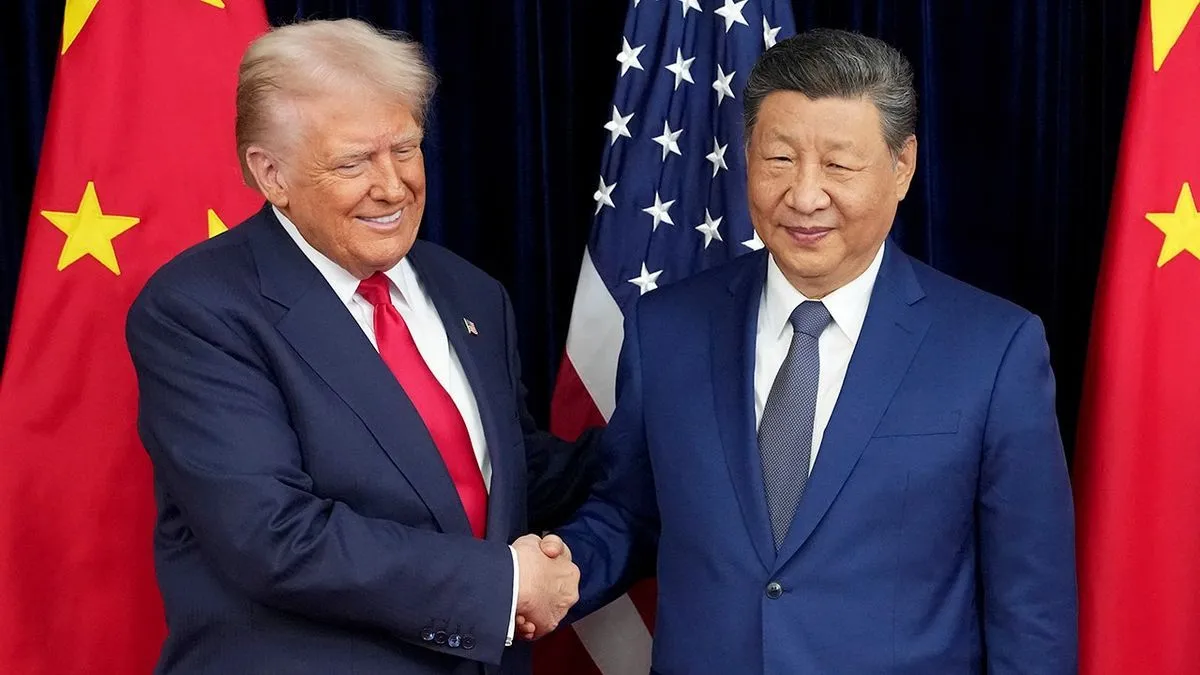
Trump Meets Xi Jinping in Beijing as Iran War Casts a Long Shadow
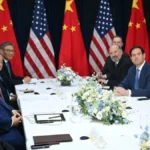
President Donald Trump touched down in Beijing on Wednesday morning for one of the most consequential diplomatic encounters of his presidency — a face-to-face summit with Chinese President Xi Jinping that was supposed to be about soybeans and semiconductors, but now carries the weight of an unfinished war.
Trump meets Xi Jinping at a moment when the geopolitical ground beneath both men has shifted. The Iran conflict — now in its third month — has reshuffled leverage, rattled energy markets, and handed China a quiet strategic advantage it did not have to work for. What was once planned as a trade-focused follow-up to their October meeting in South Korea has become something more urgent, more unpredictable, and considerably harder to script.
Also Read: Trump Rejects Iran Ceasefire Proposal, Calls It ‘Totally Unacceptable
It is the first time an American president has visited China since Trump himself made the trip in 2017. Nearly a decade on, the world looks nothing like it did then.
A Summit Delayed by War
The original plan was straightforward enough. Following a productive bilateral meeting on the sidelines of the Asia-Pacific Economic Cooperation summit in Busan, South Korea last October, Trump and Xi agreed to a follow-up summit in late March or early April 2026. The agenda was set: trade, technology, and stabilizing a relationship that had been through a bruising tariff war.
Then, on February 28, the United States and Israel launched military strikes against Iran. Within two weeks, Trump had personally asked Beijing to postpone the visit — confident, as his administration kept insisting, that the conflict would be “wrapped up” in four to six weeks.
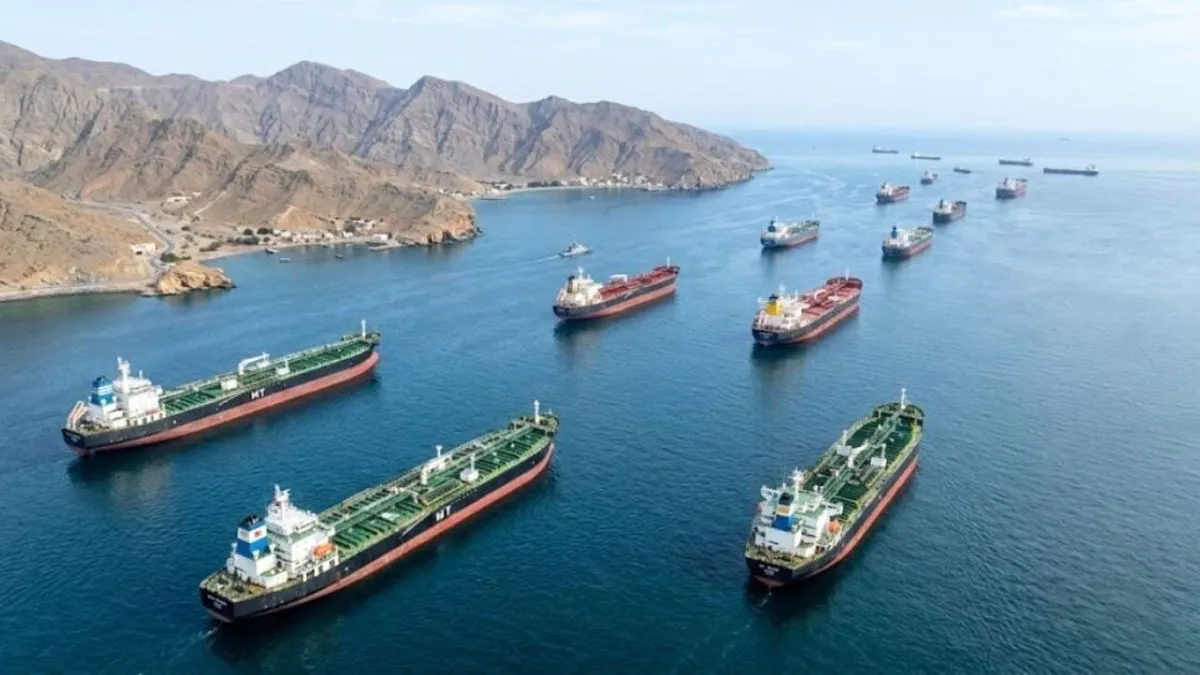
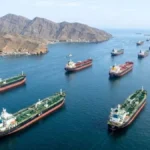
It was not. The ceasefire Trump described just days ago as being on “massive life support” remains the only thing standing between an uneasy pause and a full resumption of hostilities. The Strait of Hormuz — through which roughly 20 percent of the world’s traded oil passes — remains disputed. Iranian officials insist the waterway falls under their sovereignty. A billboard near Tehran’s Vanak Square, photographed last week, reads in Persian: “Forever in Iran’s Hand.”
That is the backdrop against which Air Force One lifted off from Washington on Tuesday.
What Trump Meets Xi Jinping to Achieve — And Why Their Goals Differ
The White House has been deliberate about framing this trip in economic language. Anna Kelly, the White House deputy press secretary, told reporters Sunday that Trump’s goal is to “deliver more good deals on behalf of our country” — agreements that rebalance trade with China while putting “American workers, farmers and families first.”
The framing is not accidental. Trump arrives in Beijing with his domestic political standing under pressure. Approval ratings have hit record lows, and gas prices have spiked sharply as a direct consequence of the Iran war’s disruption to Persian Gulf oil flows. A visible, sellable agreement — Chinese purchases of American soybeans, Boeing aircraft, perhaps the creation of a formal U.S.-China Board of Trade — would hand him a headline to post on Truth Social before wheels-up.
China’s goals are considerably broader. Henrietta Levin, a senior fellow at the Center for Strategic and International Studies who focuses on China policy, was direct about the mismatch in priorities. “China is focused on strategic questions, the answer to which will shape the future of 21st-century Asia,” she said ahead of the summit. Washington wants transactional wins. Beijing wants to reshape the architecture of the entire relationship.
China also enters this meeting from a position of quiet confidence. “They feel they won the 2025 trade war,” Levin said. After absorbing the first wave of Trump-era tariffs, Beijing upgraded its export infrastructure and emerged as a genuine high-tech manufacturing power. It did not come to this table looking for relief.
Iran: The Unavoidable Elephant in the Room
Trade will dominate the talking points released after each session. Iran will dominate the room itself.
The geometry of the problem is uncomfortable for both sides. Trump needs Xi to pressure Tehran — China is Iran’s largest trading partner and by far the biggest buyer of its oil — but Beijing has given almost no public indication it intends to play that role without receiving something significant in return. On the eve of Trump’s departure, the U.S. Treasury Department blacklisted 12 individuals and entities involved in facilitating Iranian oil sales to Chinese buyers. Beijing’s response was immediate: it said it would protect those firms.
Days before Trump landed, Iran’s Foreign Minister Abbas Araghchi traveled to Beijing and met with his Chinese counterparts. U.S. intelligence has separately indicated that China was preparing to deliver new air defense systems to Iran — an allegation Beijing has flatly denied.
Also Read: Pam Bondi Strongly Defends Record in Epstein Hearing
And yet China is not insulated from the disruption. As the world’s largest consumer of Iranian oil, the blockade at Hormuz cuts into Chinese energy supply chains directly. After hosting Araghchi, Beijing’s Foreign Ministry called for restoring “normal and safe passage” through the strait — language that sits in quiet tension with Iran’s own territorial claims over the waterway.
Trump, for his part, told reporters Tuesday he planned a “long talk” on Iran with Xi, adding: “I think he’s been relatively good, to be honest with you. You look at the blockade — no problem. They get a lot of their oil from that area. We’ve had no problem.”
The question hanging over every session is what Xi will want in exchange for any pressure on Tehran. Most analysts believe the answer is Taiwan.
Taiwan: Walking the Diplomatic Tightrope
Xi Jinping has never been subtle about Taiwan. The self-governing island — home to the world’s most advanced semiconductor manufacturing and a longstanding U.S. security partner — represents, from Beijing’s perspective, an unresolved matter of national sovereignty, not a diplomatic bargaining chip.
But it may become one anyway. Arthur Dong, a professor of strategy and economics at Georgetown University’s McDonough School of Business, noted that the U.S. military’s sustained focus on Iran has pulled resources and attention away from the Pacific, potentially creating what he described as an “opportune moment” for China to apply pressure — or worse — toward Taiwan.
Trump’s own public remarks on the subject have set off alarm bells in foreign policy circles. When a reporter asked him at the White House on Monday whether the United States would continue selling weapons to Taiwan, his answer was: “Well, I’m going to have that discussion with President Xi.” That open-ended response is precisely the kind of language Beijing studies closely. Any perceived softening — even rhetorical — can be leveraged.
Kyle Chan, a U.S.-China expert at the Brookings Institution, said the primary objective for both leaders is stability. “Trump and Xi want to reconfirm their relationship and have that kind of stability,” he said. “All the other stuff is gravy.” The Taiwan question, however, is not gravy. It is structural, and Beijing will probe it regardless of how carefully the agenda is managed.
The Corporate Delegation: Business and Geopolitics, Now Inseparable
Stepping off Air Force One alongside the president were more than a dozen of America’s most recognizable corporate executives — among them Apple’s Tim Cook and Tesla’s Elon Musk. Their presence underscores a reality that this administration has leaned into: trade and geopolitics are no longer separate conversations.
Analysts widely expect China to announce sizeable purchases of American agricultural products and Boeing aircraft — the kind of tangible deliverable that gives both sides a press release. There is also active discussion of formalizing the trade truce that emerged from last October’s APEC meeting, and of establishing AI deconfliction channels — communication lines designed to prevent accidental escalation in the technology sector, which has become its own arena of great-power competition.
Melanie Hart, senior director of the Global China Hub at the Atlantic Council, warned before the trip that even the economic agenda remained unsettled. “Everything is still in flux,” she said. “Normally, at least the economic deliverables would be nailed in. That is not the case.” She cautioned that the summit would be “evolving up until the last minute.”
Why the World Is Watching
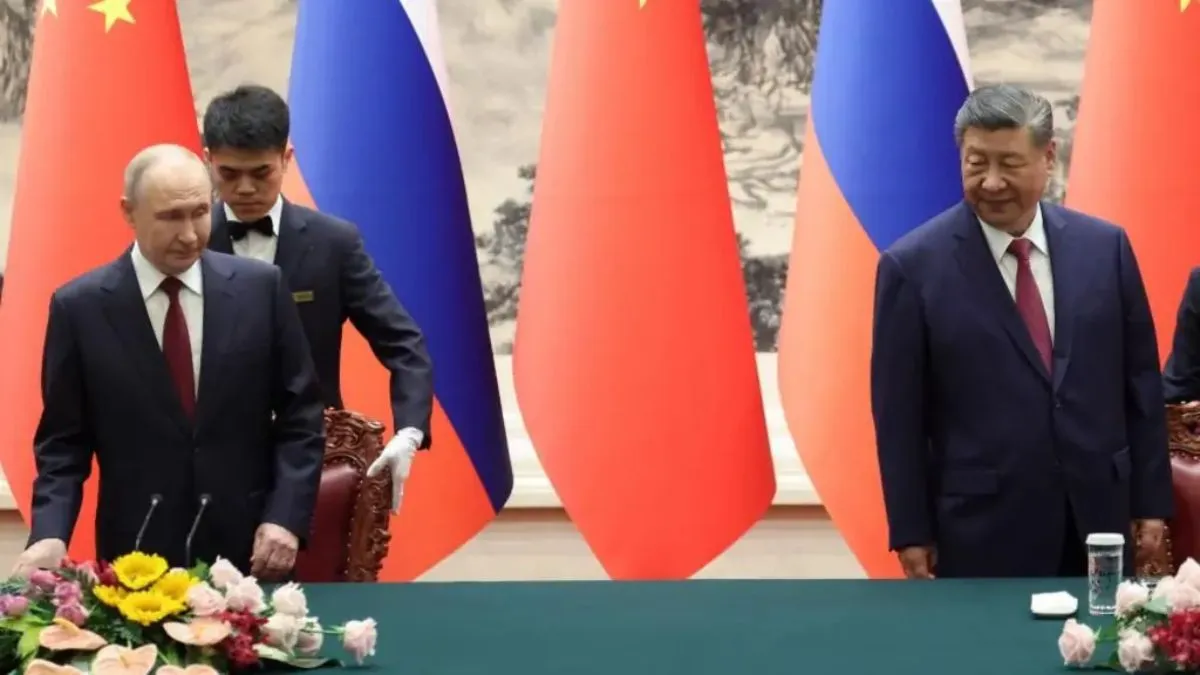
The stakes extend far beyond Washington and Beijing. The Iran war has fractured global energy markets and created a diplomatic vacuum that multiple powers are moving to fill. China is hosting Iran’s foreign minister. Russian President Vladimir Putin is expected in Beijing within days of Trump’s departure. The sequence is not coincidental.
What Trump and Xi agree — or fail to agree — on in these two days will ripple outward. A workable arrangement on Hormuz could stabilize oil prices currently being felt from Karachi to Kansas City. Taiwan concessions, if any emerge, would unsettle U.S. allies across the Indo-Pacific. A strengthened trade truce would offer one small point of predictability in a year that has been anything but.
“The stakes are extraordinarily high,” Georgetown’s Arthur Dong said. That is not hyperbole. It is simply a description of where the world stands in May 2026.
Conclusion
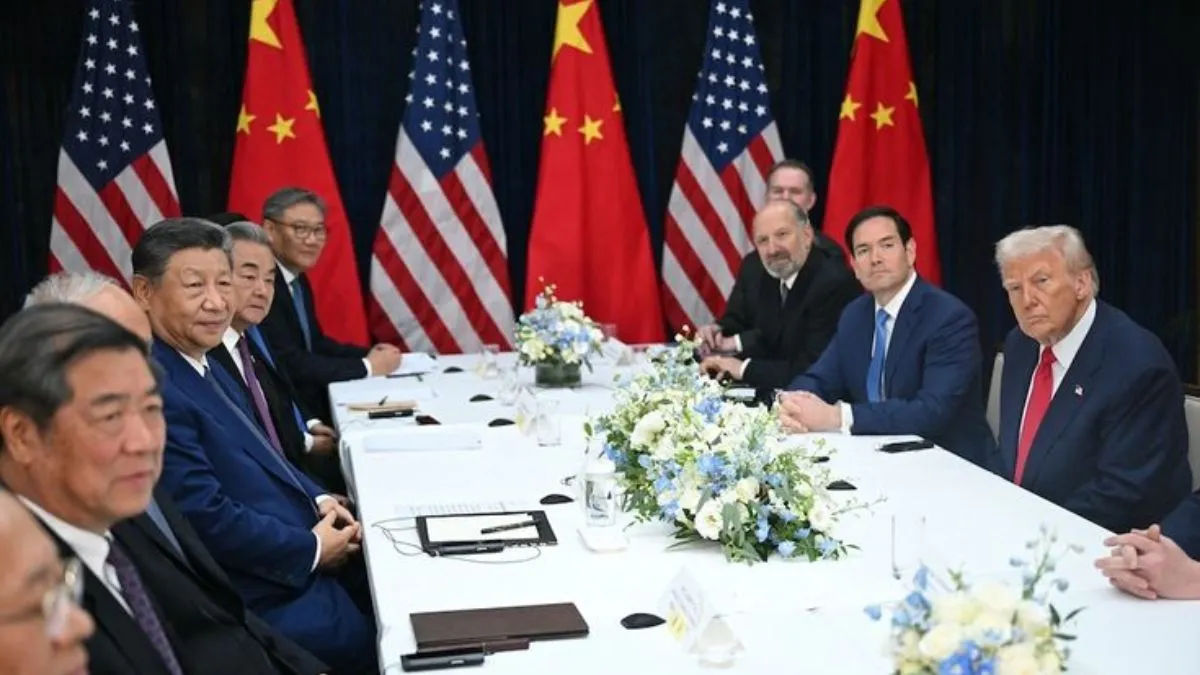
As Trump meets Xi Jinping on Chinese soil for the first time in nearly a decade, both men will work to project command and confidence. Trade agreements will be signed, communiqués will be issued, and each side will declare a measure of success.
But the harder problems — an ongoing war, an island Beijing considers its own, a bilateral relationship that remains fundamentally competitive — will not be resolved over a state banquet and two days of bilateral sessions. What this summit can realistically deliver is a reset of tone, a set of working channels, and an agreement — implicit or explicit — to keep one of the world’s most consequential relationships from deteriorating further.
In 2026, that may be the most that can honestly be hoped for. And it may, just barely, be enough.