



Trump Says Iran Attack Postponed After Gulf Allies Call for Diplomacy
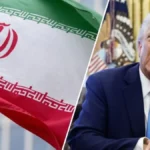
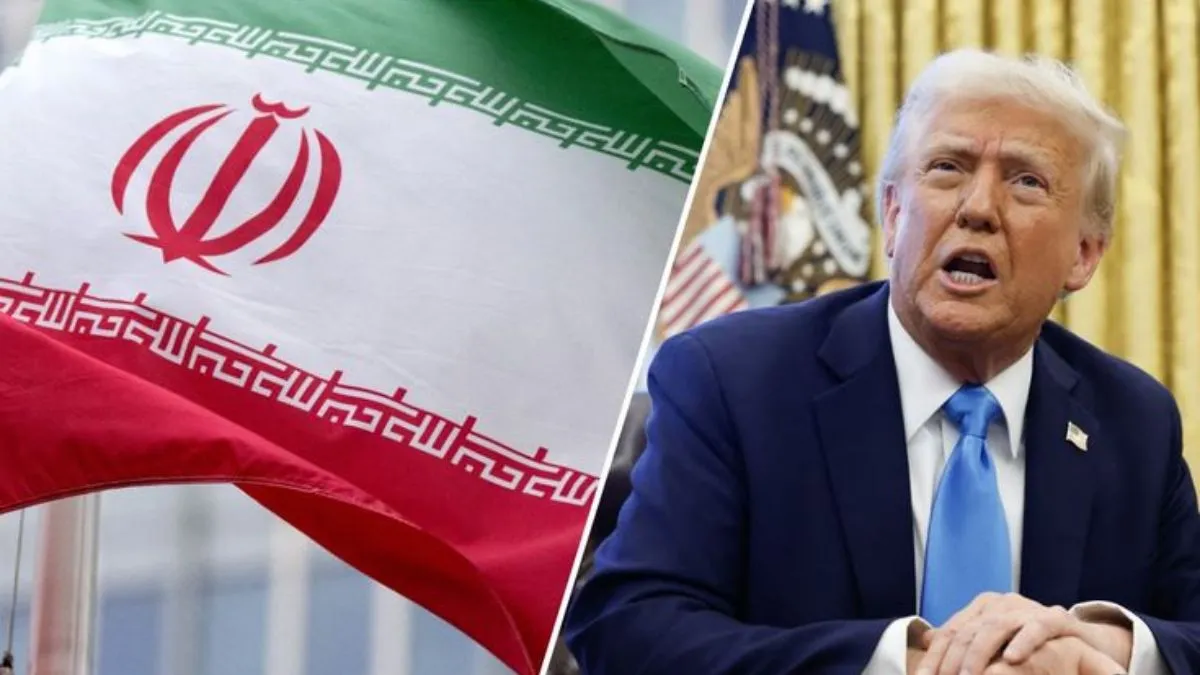
A US military strike on Iran — secretly scheduled for Tuesday — was called off at the last minute after the leaders of Qatar, Saudi Arabia, and the United Arab Emirates personally urged President Trump to give diplomacy one more chance.
Also Read: Trump Rejects Iran Ceasefire Proposal, Calls It ‘Totally Unacceptable
Trump says Iran attack plans have not been abandoned, only paused. But in a conflict that has already reshaped global energy markets and pushed the Middle East to the edge of wider war, even a 72-hour pause carries enormous weight.
Trump Says Iran Attack Is “On Hold” — Not Cancelled
Trump revealed the planned strike — and its postponement — through a Truth Social post on Monday afternoon, disclosing for the first time that a “very major attack” had been set for the following day.
The three Gulf leaders — Qatari Emir Sheikh Tamim bin Hamad Al Thani, Saudi Crown Prince Mohammed bin Salman, and UAE President Mohamed bin Zayed Al Nahyan — asked him to hold off because, in Trump’s words, “serious negotiations are now taking place.”
His bottom line for any deal was blunt: “NO NUCLEAR WEAPONS FOR IRAN.”
He also put Defence Secretary Pete Hegseth and Joint Chiefs Chairman General Daniel Caine on notice — stand down for now, but be ready to launch “a full, large scale assault of Iran, on a moment’s notice” if talks collapse.
Speaking later at the White House, Trump struck a cautiously hopeful tone:
“If we can do that without bombing the hell out of them, I’d be very happy.”
He described the pause as two to three days — “hopefully, maybe forever” — while acknowledging the fragility of the moment: past near-deals had fallen apart, he admitted, but “this is a little bit different now.”
How the Conflict Reached This Point
The war began on February 28, 2026, when the United States and Israel launched coordinated strikes against Iran, killing its Supreme Leader and dismantling large portions of its military infrastructure.
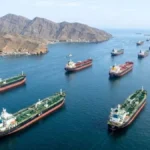
Iran retaliated by closing the Strait of Hormuz — the narrow chokepoint through which roughly one-fifth of the world’s oil and gas flows — and targeting US bases and Gulf Arab states with drones and missiles.
A ceasefire took hold on April 8, but it has held only loosely. Both sides have exchanged fire in the strait since then. Negotiations, conducted through Pakistani intermediaries, have repeatedly stalled — with Trump calling Tehran’s latest proposal “totally unacceptable” and describing the truce last week as being on “massive life support.”
The economic damage has been real and widening. Oil prices have climbed well above $100 a barrel. Fuel costs are rising across Asia, Europe, and the United States. Pakistan — which has shouldered much of the diplomatic burden as mediator — is itself suffering from high energy costs and supply disruptions.
Why the Gulf States Stepped In
The joint intervention by three Gulf monarchies is the most significant diplomatic development since the ceasefire — and a sign that even America’s closest regional partners have concluded that another round of strikes would be catastrophic.
All three states have been struck by Iranian drones and missiles during the conflict. The UAE suffered the most attacks and has been Tehran’s sharpest critic, calling for unconditional reopening of the Strait of Hormuz and war reparations. On Sunday — just one day before the planned US strike — a drone set fire to an area near the UAE’s only nuclear power plant at Barakah in what Emirati authorities called an “unprovoked terrorist attack.”
Yet despite their grievances, these governments have consistently resisted being drawn into a full-scale war. Their economies depend on stable oil prices and open shipping lanes. Saudi Arabia’s Foreign Ministry had already backed Pakistan’s mediation role. Monday’s direct calls to Trump represented something more urgent — a coordinated message that the window for a non-military resolution was about to close.
Iran’s Response: Defiant in Public, Flexible Behind Closed Doors
Iran’s President Masoud Pezeshkian addressed the news quickly, insisting that “dialogue does not mean surrender” and that Tehran had entered talks “with dignity, authority, and the preservation of the nation’s rights.”
The statement was calibrated for domestic consumption — Iran’s hard-liners have been attacking senior negotiators for weeks, accusing them of offering too much to Washington.
But behind the scenes, Iran has been moving. Reuters confirmed that Pakistan shared a revised Iranian proposal with the US over the weekend. The proposal reportedly focuses on reopening the Strait of Hormuz and ending active hostilities first, with nuclear talks deferred to a later stage.
Turkey’s Foreign Minister Hakan Fidan, speaking in Berlin, added important context: much of Iran’s enriched uranium — the material most capable of being weaponised — is currently buried under rubble from the February strikes, reducing the immediate proliferation threat. That detail, he suggested, creates some breathing room for sequencing the talks differently.
The Nuclear Deadlock in Plain Terms
The core disagreement is simple to describe and very hard to solve.
Washington wants Iran to commit — upfront — to a 20-year ban on uranium enrichment, hand over an estimated 400 kilograms of 60-percent-enriched uranium, and dismantle key facilities at Natanz, Isfahan, and Fordow.
Iran says its enrichment rights are protected under the Nuclear Non-Proliferation Treaty and are non-negotiable. Hard-line lawmakers in Tehran have declared uranium enrichment, the removal of enriched material, and control of the Strait of Hormuz as national “red lines.”
Also Read: Trump Meets Xi Jinping in Beijing as Iran War Casts
The sequencing dispute is where talks keep breaking down. Iran wants the Hormuz issue resolved first — so it can’t be used as leverage during nuclear talks. Washington insists nuclear commitments must come first — or it loses its primary bargaining chip once the blockade is lifted.
One analyst at the Middle East Institute put it plainly: “Iran is a lot less likely to make a deal than it was in 2015. The issues on the table are far broader, and the leadership is far more hard-line.”
Oil Markets, Israel, and the Next 72 Hours
The market response to Trump’s announcement was instant. Oil prices — sitting at $108.83 a barrel just before the post appeared — dropped more than $2 in minutes. They recovered partially, closing Monday at $107.25, suggesting traders see this as a pause rather than a resolution.
Trump confirmed he has briefed Israeli Prime Minister Benjamin Netanyahu and Chinese President Xi Jinping on the delay. His Beijing visit last week produced no Iran breakthrough, though both leaders agreed the strait must reopen.
The next two to three days are critical. Trump’s national security team is scheduled to meet to assess options if talks stall. The Pentagon has prepared strike packages targeting Iranian energy and infrastructure. Iran’s Foreign Minister Abbas Araghchi was travelling to Moscow on Monday to meet President Putin — a signal that Tehran is working multiple diplomatic channels simultaneously.
Analysis: What’s Different This Time
The scale of Monday’s intervention stands out. Three heads of state — not envoys, not foreign ministers — made direct personal calls to Trump. These are American allies whose own security and economies are directly at stake. Their credibility is now on the line.
At the same time, the structural obstacles haven’t shifted. The sequencing dispute remains unresolved. Iran’s leadership is visibly divided. Trump has extended deadlines before — only to launch strikes shortly after signalling flexibility.
What has changed is the cost of inaction. Oil above $100 a barrel. Revision of global growth forecasts. A ceasefire that both sides are violating. The Gulf states, once willing to absorb some disruption, now appear to have concluded the trajectory is unsustainable.
Whether that shared alarm is enough to close one of the most stubborn diplomatic gaps in recent memory is the question the next 72 hours will begin to answer.
Conclusion
Trump says Iran attack plans remain on the table — just not for today. The window is narrow, the conditions demanding, and the history of this conflict is littered with near-deals that never materialised.
What is new is that three of the region’s most powerful governments have put their credibility behind the possibility of peace. Whether that proves decisive — or simply delays the inevitable — will become clear within days.
The Strait of Hormuz remains closed. Oil prices remain elevated. And the clock, as Trump has reminded the world more than once, is still ticking.