




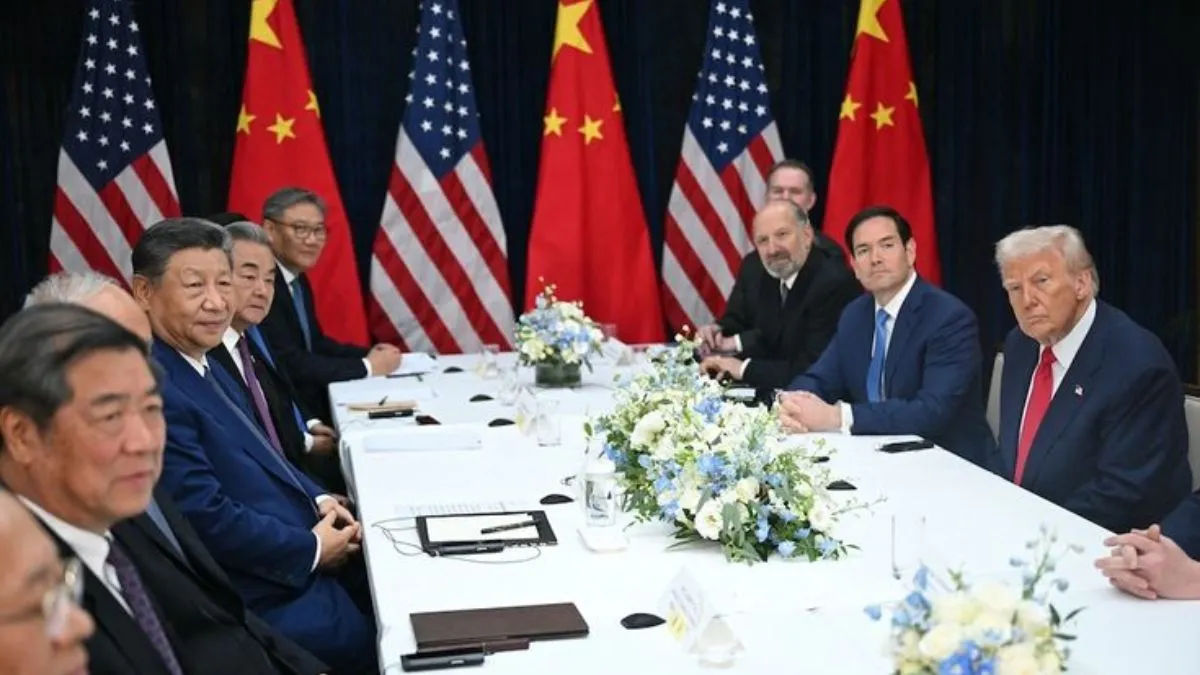
Trump Visit China: Summit Ends With Warm Words, Modest Wins, and a Taiwan Warning
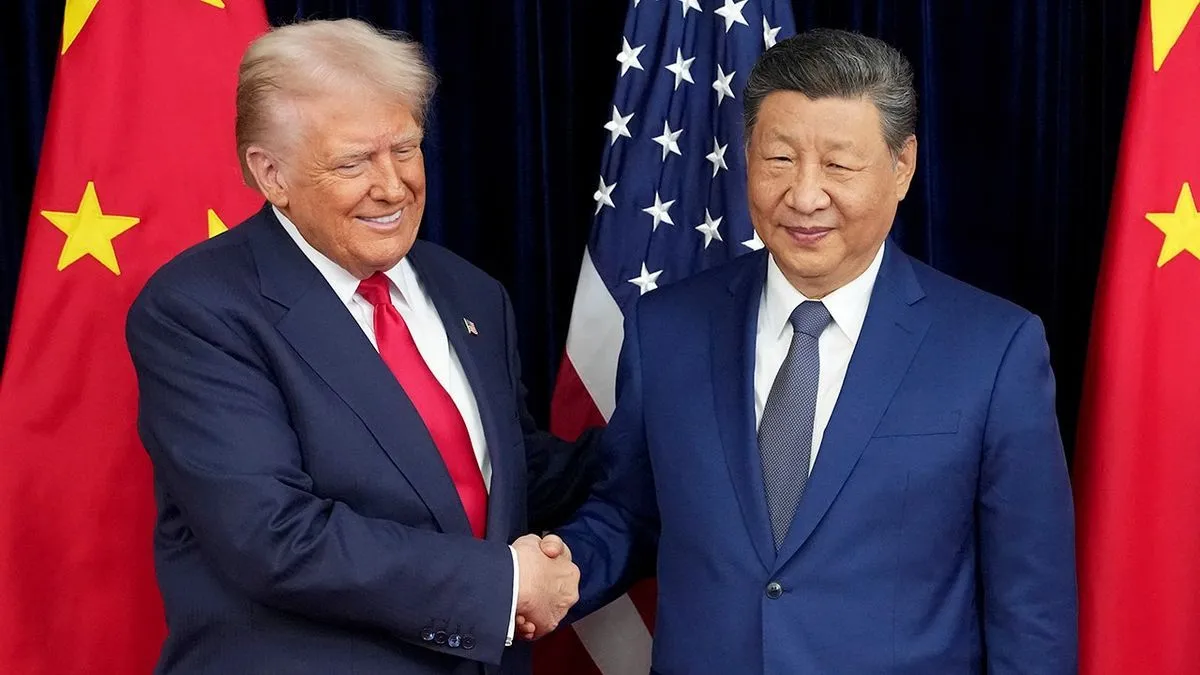
BEIJING — President Donald Trump wrapped up a two-day state visit to China on Thursday, departing Beijing Capital International Airport with an honor guard send-off and a declaration that his talks with President Xi Jinping had been “fantastic” — even as analysts and diplomats scrutinized the summit’s limited concrete outcomes and a blunt Chinese warning over Taiwan.
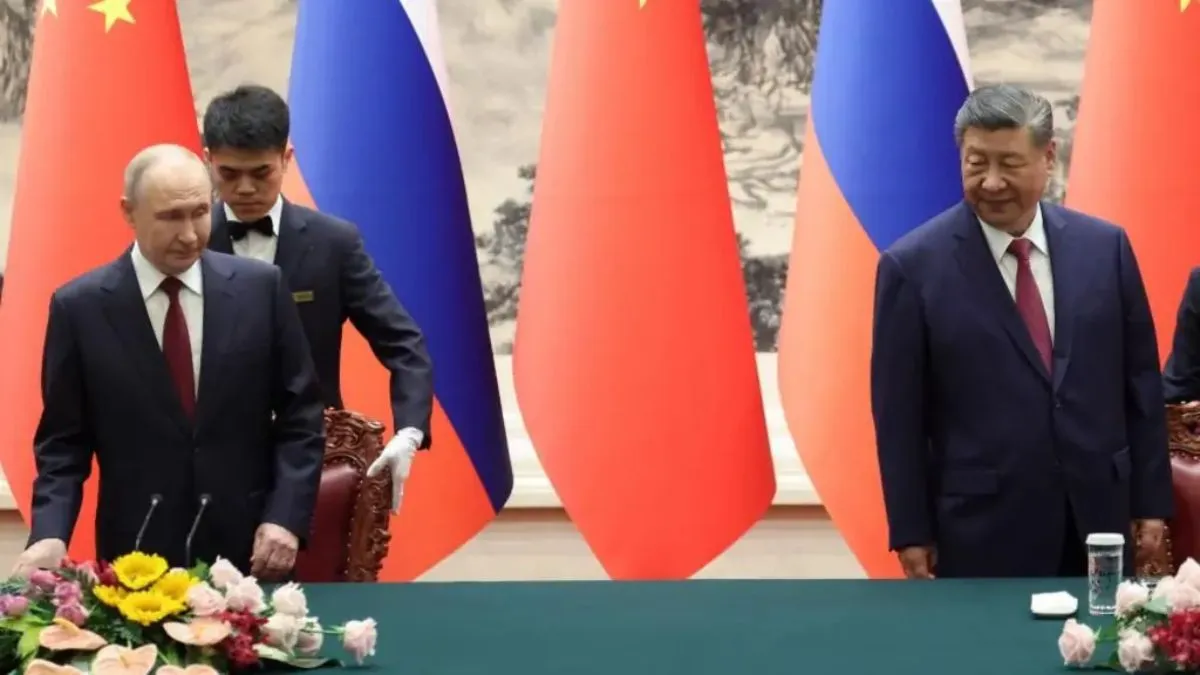
Trump visit China, the first by an American president since Barack Obama’s 2014 meeting at Zhongnanhai, was billed by both governments as an effort to stabilize what Xi himself called “the world’s most important bilateral relationship.” By all visible measures, the pageantry held up: a grand welcome ceremony at the Great Hall of the People, a rare private tour of Zhongnanhai’s ancient gardens, a visit to the 15th-century Temple of Heaven, and a formal state banquet at which Trump invited Xi and his wife to a reciprocal White House visit on September 24.
Also Read: Trump Meets Xi Jinping in Beijing as Iran War Casts
But beneath the diplomatic warmth, the two-day encounter left the world’s most consequential geopolitical relationship still navigating its deep structural fault lines — on Taiwan, trade, artificial intelligence, and the Iran war.
A Framework of “Managed Stability” — With Limits
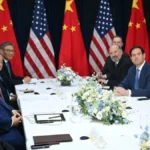
The clearest tangible agreement to emerge from the summit was a shared commitment to what Beijing’s official readout described as a “constructive China-U.S. relationship of strategic stability.” Xi spelled out three pillars: cooperation as the dominant mode, “measured competition” kept within bounds, and manageable differences that do not spiral into crisis.
Tianchen Xu, senior economist at the Economist Intelligence Unit, described the formulation as signaling “a period of managed stability that will hold for some time,” adding that while frictions would persist, “there will be a guardrail, and things won’t spiral out of the two sides’ control as they nearly did in 2025.”
That near-spiral is recent memory, not distant history. Just over a year ago, Washington and Beijing had imposed triple-digit tariffs on each other’s goods — at one point exceeding 140 percent — in a trade war that also spilled into rare earth export restrictions, semiconductor controls, student visa disputes, and fentanyl precursor crackdowns. Both sides eventually stepped back from the brink, and the Beijing summit was, in many ways, a formal ceremony marking that retreat.
What Was — and Wasn’t — Agreed on Trade
On the economic front, the White House readout pointed to progress on expanding market access for American companies in China and increasing Chinese investment in U.S. industries. Trump announced that Xi agreed to purchase 200 Boeing aircraft — a symbolic headline number — and both governments pledged to work toward halting the flow of fentanyl precursor chemicals from China into the United States.
Ahead of the summit, Beijing had already moved to restore U.S. beef imports, issuing new licenses for hundreds of American producers — a goodwill gesture timed deliberately to the Trump visit.
But no sweeping trade deal was announced. There was no agreement on rare earths, no breakthrough on semiconductors, and no new framework for artificial intelligence cooperation — an area experts had flagged as both the most consequential and the most contested item on the bilateral agenda. Chinese AI capabilities have grown considerably since Trump’s first term, and the Council on Foreign Relations, in analysis published ahead of the summit, noted that Beijing’s primary interest was buying time to consolidate its technological position rather than making structural reforms to its economic model.
The parallel “Board of Trade” and “Board of Investment” mechanisms that working-level officials had sketched out in prior meetings were referenced but not formally announced. Chinese purchases of American agricultural goods remained a key talking point, with no hard commitments disclosed.
The Taiwan Question: Beijing’s Unmistakable Warning
The starkest moment of the summit — and the one most likely to shape its long-term significance — was Xi’s direct warning to Trump over Taiwan.
“The Taiwan question is the most important issue in China-U.S. relations,” Xi said, according to Beijing’s official readout. “If it is handled properly, the bilateral relationship will enjoy overall stability. Otherwise, the two countries will have clashes and even conflicts, putting the entire relationship in great jeopardy.”
Chinese state media had described Taiwan as “the first red line” of the summit in the lead-up to Trump’s arrival. The warning was not subtle.
The American readout told a different story. The White House’s account of the bilateral meeting made no mention of Taiwan whatsoever, focusing instead on trade and economic cooperation. Secretary of State Marco Rubio, when pressed by reporters, said Taiwan “did not feature prominently” in the day’s discussions and declared that “U.S. policy on the issue of Taiwan is unchanged as of today.”
Also Read: India and US Trade Deal Bring Relief After Months of Tension
That divergence in readouts — Beijing centering Taiwan as the paramount concern; Washington omitting it entirely — is itself a telling indicator of where the two governments see the pressure points in this relationship. Analysts tracking the half-dozen Trump-Xi exchanges since January 2025 have noticed the same asymmetry: American readouts focus on trade, Chinese readouts elevate Taiwan.
Trump, when asked about Taiwan by reporters after the temple visit, did not respond.
Iran and the Strait of Hormuz
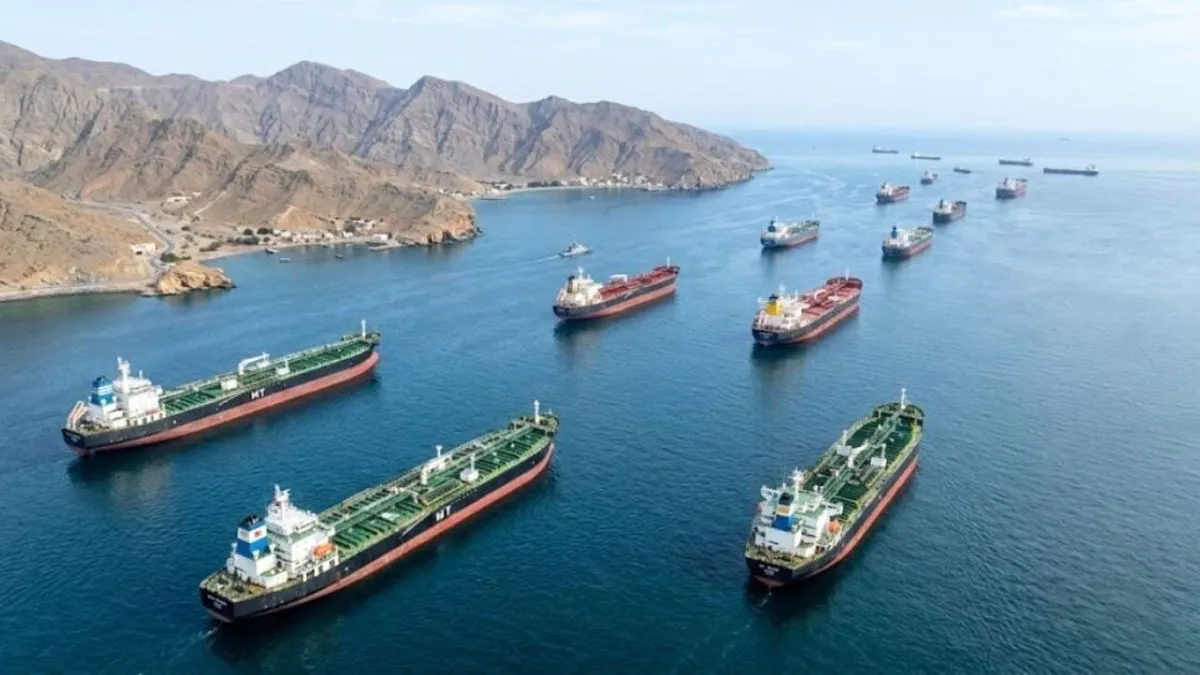
The bilateral talks also addressed the ongoing Iran war — a conflict that had itself delayed Trump’s original April visit to Beijing by several weeks. Both leaders agreed that Iran must not be allowed to obtain nuclear weapons, and both agreed that the Strait of Hormuz must remain open to ensure global energy flows. Xi reiterated Beijing’s opposition to any militarization of the waterway or efforts to impose transit tolls.
Trump told Fox News host Sean Hannity afterward that Xi said he would like to help open the Strait of Hormuz, and that Beijing would not provide Iran with military equipment — a commitment Defense Secretary Pete Hegseth had previewed in April, calling it a “breakthrough” he attributed to the “strong and direct relationship” between the two presidents.
China also signaled interest in purchasing more American crude oil as a way to reduce its reliance on Middle Eastern supply chains — a commercially motivated alignment that also carried diplomatic utility for both sides.
The Business Delegation and Xi’s Market Message
Trump was accompanied to Beijing by a notable corporate contingent, including Nvidia CEO Jensen Huang, Tesla and SpaceX chief Elon Musk, Apple CEO Tim Cook, Meta President Dina Powell McCormick, Boeing CEO Kelly Ortberg, and Citigroup CEO Jane Fraser, among others. The executives met separately with Xi at the Great Hall.
Xi told the CEOs that China’s door “would only open wider” and that American companies would find “broader prospects” in the country. Musk told reporters that “many good things” had been achieved. Cook gave reporters a peace sign and a thumbs-up. Jensen Huang said the meetings had gone well.
Whether corporate enthusiasm translates into the kind of structural market access American businesses have long demanded — particularly in sectors such as financial services, cloud computing, and electric vehicles — remains to be seen.
A Symbolic Visit With Strategic Weight
The atmospherics of the Trump visit China were, by design, exceptional. Xi offered Trump a tour of Zhongnanhai — the walled leadership compound beside the Forbidden City where China’s top leaders live and work — a rare gesture for a foreign leader. Hot-mic audio caught Xi pointing out trees on the grounds, some 490 years old, others more than a millennium. Trump called it “a nice place.” Xi offered rose seeds as a parting gift.
The symbolism was carefully calibrated. The compound’s last major American presidential event was Obama’s 2014 meeting with Xi. Before that, Richard Nixon met Mao Zedong there in 1972 — the visit that opened the modern era of U.S.-China relations. Inviting Trump into that space carries unmistakable diplomatic weight.
Trump has now invited Xi to Washington for late September, promising a reciprocal state visit. Further meetings are expected at the Asia-Pacific Economic Cooperation forum in Shenzhen and the G20 in Miami. Each will offer new opportunities — and new tests — for the “managed stability” framework both leaders have now publicly endorsed.
Why This Matters for the World
The U.S.-China relationship is the axis around which much of global trade, technology, and security policy revolves. A rupture — as nearly happened during last year’s tariff escalation — carries consequences for supply chains, commodity prices, and financial markets in virtually every country. The reassurance that both governments are committed to avoiding another spiral is, in itself, market-moving news.
At the same time, the summit’s limited concrete outcomes and its unresolved tensions — particularly over Taiwan — mean that the bilateral relationship remains structurally fragile. Xi’s warning about “clashes and even conflicts” was not rhetorical flourish; it reflects Beijing’s genuine red-line calculus on the island’s status. Any American action on Taiwan arms sales, diplomatic recognition, or military cooperation carries the risk of unraveling whatever goodwill the Beijing summit produced.
For the rest of the world watching the Trump visit China, the core message is this: the two superpowers are talking again, and they’ve agreed to keep talking. That, for now, is the headline — and its own form of progress.