





PM Shehbaz Arrives in Quetta to Chair High-Stakes NAP Apex Committee Meeting on Balochistan Security
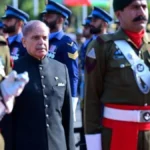
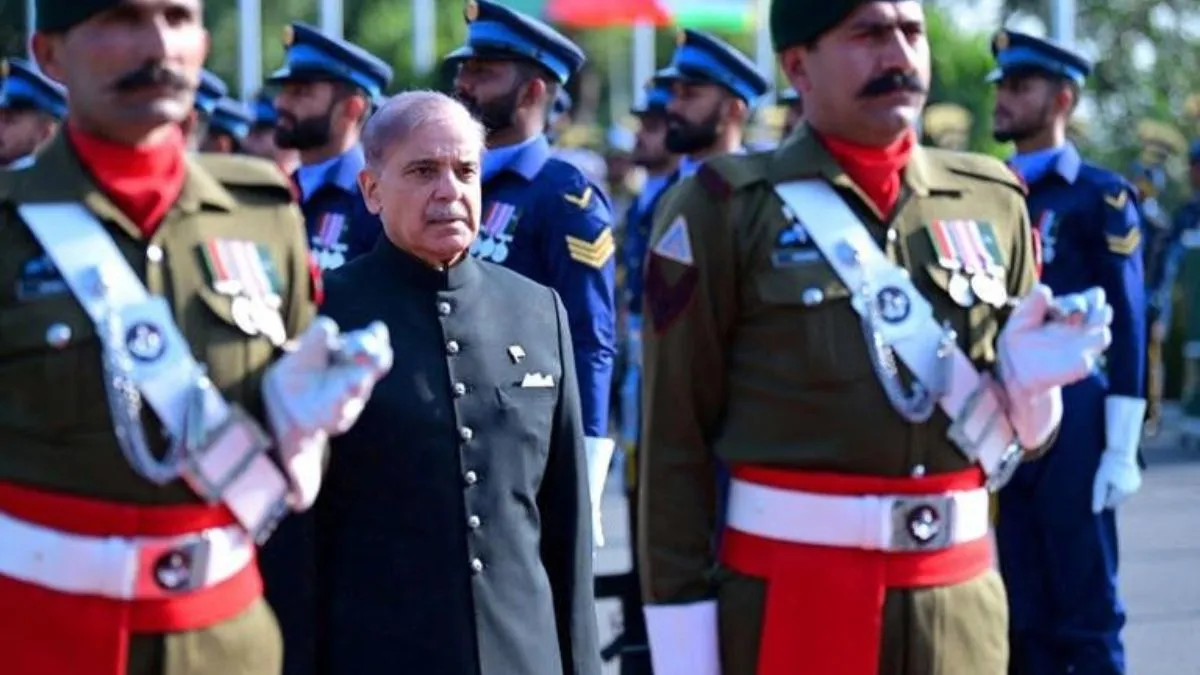
Prime Minister Shehbaz Sharif landed in Quetta on Tuesday morning, stepping off the plane into one of Pakistan’s most volatile security environments. His one-day visit to the provincial capital is centred on chairing a meeting of the National Action Plan (NAP) Apex Committee — a gathering of the country’s top military, intelligence, and civilian leadership — as Balochistan continues to reel from months of sustained militant attacks.
Also Read: Pakistan Condemns UAE Attack on Barakah Nuclear Plant
PM Shehbaz arrives in Quetta at a moment when the pressure on the state is real, visible, and deeply felt by ordinary citizens across the province. The Apex Committee session will review the current security situation in full, with sources indicating the prime minister will receive detailed briefings on ongoing counter-terrorism operations and the progress made on the ground.
PM Shehbaz Arrives in Quetta — High-Level Reception at Airport
The prime minister was received at Quetta Airport by Balochistan Governor Jaffar Khan Mandokhail, Chief Minister Mir Sarfaraz Bugti, Chief Secretary Shakeel Qadir, Balochistan Assembly Speaker Abdul Khaliq Achakzai, Inspector General of Police Balochistan, and a host of senior provincial ministers and civil officials.
Accompanying the prime minister were key federal figures including Deputy Prime Minister Muhammad Ishaq Dar, Federal Minister for Defense Khawaja Muhammad Asif, Federal Minister for Information Attaullah Tarar, and Federal Minister for Commerce Jam Kamal Khan — a cabinet-level delegation that underscores just how seriously Islamabad is treating this visit.
The meeting is also expected to be attended by the Chief of Army Staff, heads of intelligence agencies, and senior military commanders from the Balochistan Corps.
PM Shehbaz Arrives in Quetta to Chair NAP Apex Committee — But Why Does It Matter?
The National Action Plan was born out of tragedy. After the December 2014 Army Public School massacre in Peshawar — one of the deadliest terrorist attacks in Pakistan’s history — the government formulated a 20-point counter-terrorism framework to unify the country’s response to militancy. The NAP Apex Committee is its highest enforcement body, bringing federal and provincial leadership together with the military in a single room.
When this committee convenes in Quetta specifically, it means Balochistan’s security is not just a provincial concern — it is, in that moment, the nation’s top priority.
Sources told 24NewsHD TV channel that Tuesday’s session will “take stock of the overall law and order situation in Balochistan,” with the prime minister also set to hold separate one-on-one meetings with the governor, the chief minister, provincial cabinet members, and members of the provincial assembly.
The Security Crisis That Brought the PM Here
To understand the weight of Tuesday’s Apex Committee session, the backdrop of violence in Balochistan must be understood plainly.
On January 31, 2026, militants affiliated with the Balochistan Liberation Army (BLA) — designated as a terrorist organisation by Pakistan, the United States, the United Kingdom, and the European Union — launched one of the most brazen coordinated attacks the province had seen in years. Striking simultaneously across at least 12 locations including Quetta, Kalat, Nushki, Gwadar, Mastung, and Pasni, the attackers used suicide bombings, armed assaults on police stations, road blockades, and railway track explosions.
The toll was devastating. Seventeen security personnel were martyred, 31 civilians — including women and children — were killed, and dozens more were wounded. In Gwadar alone, militants attacked a camp housing migrant workers, killing 11 people.
Balochistan Chief Minister Mir Sarfaraz Bugti faced the media directly after the attacks, giving a press conference that pulled no punches:
“This is the highest number since Pakistan is facing this war on terror,” Bugti said, confirming that 145 terrorists had been killed by security forces within 40 hours of the attacks beginning. “Why will we get tired? We are the state of Pakistan. We will not get tired.”
Also Read: Lakki Marwat Market Blast Kills Nine at Pakistan Market
He also accused India’s intelligence agency RAW of backing the militant groups, stating that authorities possessed “solid and circumstantial evidence.” India and Afghanistan have both denied these allegations.
Reiterating the provincial government’s position, CM Bugti has been unequivocal throughout:
“No compromise would be made on the security of Balochistan,” he stated, adding that the conflict was “a purely intelligence-driven war” — one that would continue through intelligence-based operations rather than conventional military deployments in urban areas.
PM Shehbaz’s Stance: No Leniency, No Exceptions
This is not the first time PM Shehbaz has made the journey to Quetta to chair an Apex Committee meeting. He did so in August 2024, in the immediate aftermath of a wave of militant attacks that killed nearly 50 people, including 23 labourers from Punjab who were pulled from vehicles and shot dead after an identity check.
On that occasion, speaking directly to the committee in Quetta, the prime minister was unsparing:
“The recent terrorist incidents have saddened the entire nation, and there will be no leniency for terrorists who spill the blood of innocent people,” Sharif said. He vowed that every possible measure would be taken for the development and prosperity of Balochistan.
At a later Federal NAP Apex Committee meeting in November 2024, the prime minister acknowledged an uptick in terrorist attacks across Balochistan and Khyber Pakhtunkhwa — and the committee formally approved a comprehensive military operation targeting militant organisations including the BLA, Majeed Brigade, BLF, and BRAS.
The COAS, speaking at the same session, captured the military’s position:
“In war against terrorism, every Pakistani is a soldier — some in uniform and some without it.”
What Is on Tuesday’s Agenda
Based on the pattern of previous Apex Committee sessions and information from sources familiar with the meeting, Tuesday’s agenda in Quetta is expected to cover:
Counter-terrorism operations review: Progress under the “Azm-e-Istehkam” (Resolve for Stability) campaign — Pakistan’s most active current counter-insurgency push, authorised by the Federal Apex Committee — will be front and centre. Intelligence-based operations have been running continuously across Balochistan’s most volatile districts, and the committee will assess what ground has been gained.
Cross-border threats: The government’s position that hostile foreign actors — specifically India and Afghanistan-based militant sanctuaries — are fuelling the insurgency will be central to the briefing. ISPR has consistently described targeted groups as “Indian proxies” and “Fitna-al-Hindustan.” This framing, now embedded in official policy, shapes the counter-terrorism playbook.
CPEC security: With billions of dollars in Chinese investment running through Balochistan — including through Gwadar port and the broader corridor infrastructure — protecting CPEC assets and foreign nationals working on these projects remains a standing agenda item.
Governance and development: Analysts and federal officials have increasingly acknowledged that military pressure alone cannot resolve Balochistan’s conflict. Development spending, officer postings, and administrative capacity-building are expected to feature in discussions alongside the security briefings.
Disinformation and social media: PM Shehbaz has raised this concern at multiple NAP sessions, warning that coordinated online campaigns are undermining the state’s counter-terrorism narrative and “brainwashing” vulnerable youth.
Why the Visit to Quetta — Not a Summons to Islamabad — Matters
Pakistan’s federal leadership has historically drawn criticism from Balochistan for what many in the province describe as a distant, administrative style of governance — policies drafted in Islamabad for problems rooted hundreds of kilometres away.
When the prime minister chairs the Apex Committee in Quetta itself — rather than convening it in the capital and expecting provincial officials to travel — it carries symbolic and practical weight. It signals federal presence, not just federal oversight.
Also Read: IMF Loan Pakistan 2026 – $1.2 Billion Approved
It also gives the prime minister the opportunity to hold direct meetings with elected members of the Balochistan Assembly, provincial cabinet ministers, and community-level officials — adding a political dimension to what is primarily framed as a security visit.
The combination matters. As security analysts and Balochistan watchers have long argued, the province’s cycle of violence has roots in legitimate political and economic grievances that no amount of intelligence-based operations alone can fully address. Meetings like Tuesday’s, when conducted in the province itself, at least signal an awareness of that reality.
The Bigger Picture: Balochistan’s Place in Pakistan’s Future
Balochistan is Pakistan’s largest province by area, richest in natural resources, and yet historically its most underdeveloped. The insurgency — which Pakistani authorities trace in its current form to the early 2000s — has cost thousands of lives and repeatedly disrupted investment, development, and civilian life.
The stakes have grown significantly with CPEC. Gwadar port and the corridor infrastructure represent not just Pakistani ambitions but a major Chinese geopolitical and economic investment. Attacks on CPEC-linked sites, foreign workers, and transportation links carry consequences that extend well beyond Balochistan’s borders — touching Pakistan’s relationship with Beijing, its regional standing, and its ability to attract further foreign investment.
In September 2025, a US metals company signed a $500 million investment agreement with Pakistan for operations in Balochistan — a deal concluded just one month after Washington formally designated the BLA and its armed wing as foreign terrorist organisations. That timing was not coincidental. International economic interest in Balochistan is rising precisely as the security challenge intensifies.
Conclusion
When PM Shehbaz arrives in Quetta to lead the NAP Apex Committee meeting on Tuesday, the visit is not administrative routine. It is a federal government showing up — in person, with its top ministers and the army chief — to a province that has seen too much violence, too little development, and too many years of feeling like an afterthought.
Whether Tuesday’s session produces new policy commitments or reinforces existing ones, its significance is in the message it sends: that Balochistan’s stability is a national priority, the counter-terrorism campaign under Azm-e-Istehkam will continue without pause, and the state is not looking away.
As CM Bugti has said bluntly: “We will not let them go.”
The question is whether the combined weight of military operations, political engagement, and federal attention can, over time, build the durable peace that force alone has never managed to deliver.