



Iran Deal Prospects Rise as Tankers Exit Hormuz, Trump and Vance Signal Progress
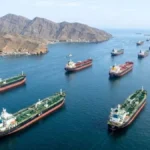
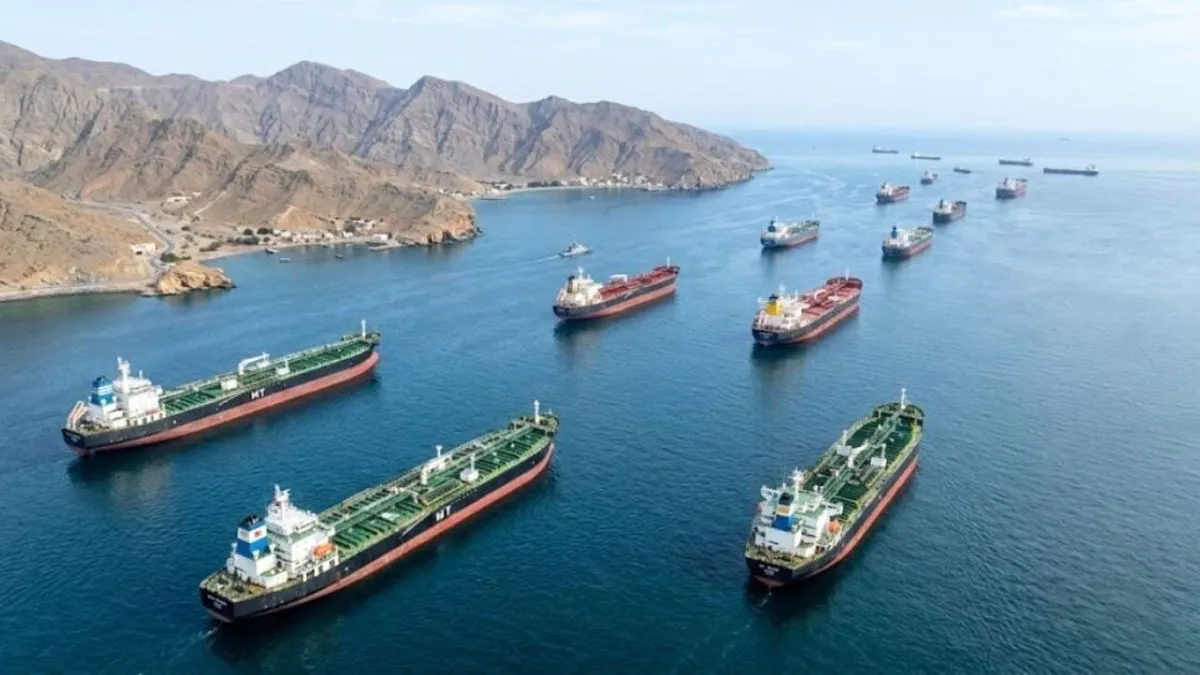
For the first time in weeks, something shifted in the Strait of Hormuz on Wednesday. Two Chinese supertankers, each carrying roughly two million barrels of Iraqi crude oil, navigated out of the narrow waterway connecting the Persian Gulf to the open sea — a movement that, in any normal year, would barely register. But these are not normal times. Their passage set off a quiet ripple of optimism across oil trading floors from London to Singapore, and for good reason: it came on the heels of the most encouraging signals yet from the White House that a negotiated end to the US-Iran conflict may, finally, be within reach.
Also Read: Trump Says Iran Attack Postponed at Gulf Allies’ Request
Iran deal prospects haven’t looked this plausible in months — though experienced observers are quick to caution that the distance between cautious optimism and a signed agreement remains considerable.
We’re in a Pretty Good Spot: Vance Raises Hopes at White House Briefing
Vice President JD Vance addressed reporters Tuesday in a tone markedly different from the hawkish posture Washington has maintained since hostilities began in late February. “We’re in a pretty good spot here,” Vance told the White House press briefing, describing ongoing negotiations with Tehran as productive, if complicated.
He was candid about the difficulties. Vance acknowledged difficulties in negotiating with what he described as a fractured Iranian leadership. “It’s not sometimes totally clear what the negotiating position of the team is,” he said, adding that the US is focused on making its own red lines clear rather than trying to decipher Tehran’s internal divisions.
Those red lines, Vance made plain, center squarely on nuclear weapons. He said the Trump administration’s broader objective is to prevent nuclear proliferation, and that if Iran acquires a nuclear weapon, the question becomes which country gets one next — and after that, which one follows. It was a framing that signaled Washington isn’t just negotiating a bilateral ceasefire; it sees this moment as a potential inflection point for the entire regional order.
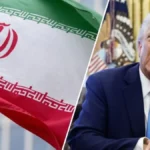
President Trump was equally direct — if more dramatic — in his own remarks earlier this week. Trump told reporters at the White House that he had been “an hour away” from ordering a new round of attacks on Iran, but had paused after Tehran submitted a fresh peace proposal. He framed the pause not as a concession, but as a strategic choice: give diplomacy one more window, or escalate. For now, he chose diplomacy.
Trump said on Tuesday the war would be over “very quickly” and that Iran’s leaders are seeking a deal.
What Tehran Is Asking For — And Why Washington Is Still Resistant
The nature of Iran’s latest proposal, disclosed Tuesday through Iranian state media, reveals just how wide the gap between the two sides remains, even as the rhetoric softens.
Tehran’s proposal calls for ending hostilities on all fronts including Lebanon, the withdrawal of US forces from areas near Iran, and financial reparations for destruction caused by the US-Israeli war. Iran’s Deputy Foreign Minister Kazem Gharibabadi also said Tehran seeks the lifting of sanctions, the release of frozen funds held in foreign banks, and an end to the US marine blockade.
That’s a sweeping list of demands. And critically, the terms appeared largely unchanged from Iran’s previous offer, which Trump rejected last week as “garbage.” The fact that Tehran is resubmitting a similar framework — perhaps with modest modifications — suggests its negotiators believe there’s more room to maneuver on the American side than Washington has publicly acknowledged.
There are some indications that may be true. A senior Iranian official suggested Washington may be softening some of its demands, with a source saying the US had agreed to release a quarter of Iran’s frozen funds held in foreign banks — though Iran wants all assets released. Washington also showed more flexibility in agreeing to let Iran continue some peaceful nuclear activity under International Atomic Energy Agency supervision, though the US has not confirmed this.
Also Read: Trump Rejects Iran Ceasefire Proposal, Calls It ‘Totally Unacceptable
The nuclear question is where the fundamental tension lies. Trump has previously said he would accept nothing short of “total dismantlement” of Iran’s nuclear program, a position that Tehran has never accepted and is unlikely to accept now. Whether the two sides can find language that gets Trump the political win he needs while giving Iran a face-saving arrangement on nuclear activity is the central diplomatic puzzle of the moment.
The Hormuz Factor: Why Tanker Movements Matter So Much
The movement of those two Chinese tankers on Wednesday was symbolic — but it was also economically significant. The Strait of Hormuz is, by any measure, one of the most consequential 21 miles of water on earth. About a fifth of global energy supply flows through it. Since Iran effectively forced its closure in the early stages of the conflict, the disruption has been catastrophic for global commodity markets.
The conflict has caused the worst-ever disruption to global energy supplies, blocking hundreds of tankers from leaving the Gulf while damaging energy and shipping facilities across the region. Oil prices, which were already elevated before the conflict, surged further — and have only partially eased as ceasefire talks inched forward.
On Wednesday, oil prices eased on the positive signals from Washington and in the Gulf, with Brent crude falling to as low as $110.16 a barrel before recovering some of those losses. That remains roughly 40 percent above pre-conflict levels, a figure that has filtered into consumer prices worldwide, from gasoline at the pump in the United States to food and transport costs across the developing world.
Trump is under intense political pressure at home to reach an accord that would reopen the Strait. Gasoline prices remain elevated, and his approval rating has fallen sharply with congressional elections approaching in November. That domestic pressure is not incidental to the diplomacy — it is, arguably, its main engine right now.
The Ceasefire’s Fragile Hold — and What Could Still Go Wrong
The April ceasefire that halted direct US-Israeli bombing of Iran has largely held, but the situation on the ground is far from stable. Drones have been launched from Iraq toward Gulf countries including Saudi Arabia and Kuwait, apparently by Iran and its allies — a sign that Tehran’s proxy networks remain active even as its leadership pursues negotiations.
Lebanon remains a particularly combustible variable. Iran’s latest proposal explicitly includes ending hostilities in Lebanon — a demand that directly implicates Israel, which has continued military operations there against Hezbollah. The war has yet to deprive Iran of its stockpile of near-weapons-grade enriched uranium or its ability to threaten neighbors with missiles, drones, and proxy militias — leaving Washington’s stated war objectives largely unmet, even as it negotiates.
Iran’s parliament, meanwhile, is not sending cooperative signals. Ebrahim Azizi, head of the Iranian parliament’s national security committee, said on social media that Trump’s pausing of an attack was due to a realization that any move against Iran would mean facing a decisive military response — a framing that plays well domestically in Tehran but does little to build trust with Washington.
Pakistan, which hosted the only formal round of peace talks last month, is still serving as a back-channel. A Pakistani source confirmed that Islamabad had shared Iran’s latest proposal with Washington, adding that the sides “keep changing their goalposts” and warning: “We don’t have much time.”
Gulf States, Oil Markets, and the World Watching
The Gulf Arab states — Saudi Arabia, Qatar, and the United Arab Emirates — have been working quietly to prevent an escalation. Trump said the leaders of Qatar, Saudi Arabia, and the UAE had requested that he hold off on a new round of attacks, and that “a deal will be made which will be very acceptable to the United States of America, as well as all countries in the Middle East and beyond.”
Their involvement matters. These states depend on the Strait of Hormuz for their own energy exports, and a prolonged closure threatens their economic stability just as surely as it threatens global supply chains. That they are actively pressing Washington to hold back is a measure of how much is at stake for the region.
For global markets, the core concern is simple: the longer the Strait remains effectively closed or restricted, the more structural damage is done to energy supply chains, insurance markets, and shipping networks that took decades to build. Even a partial reopening — even the symbolic passage of two tankers — is enough to move markets, which says something about how tightly wound the situation remains.
Analysis: Why This Moment Feels Different — and Why Caution Still Applies
The combination of factors in play this week — the tanker movements, the softened rhetoric from both Trump and Vance, the new Iranian proposal, and the pressure from Gulf allies — does represent a more convergent moment than anything seen since the April ceasefire. Iran deal prospects, in the view of several analysts monitoring the talks, are genuinely higher today than they have been at any point in the past month.
Also Read: Trump Visit China for High-Stakes Xi Jinping Summit in Beijing
But there are real reasons to be cautious. Iran’s proposals still include terms — reparations, full sanctions relief, US troop withdrawal — that Washington has shown no willingness to grant. The nuclear question is genuinely unresolved. The role of Israel, which has its own set of strategic interests and is not formally party to these negotiations, adds another layer of unpredictability. And the clock is ticking: Trump faces midterm elections in November and has a political interest in declaring victory, but a bad deal — or one that falls apart — could be worse for him than no deal at all.
What seems clear is that both sides have calculated, at least for this week, that the cost of continued conflict outweighs the compromises required to end it. Whether that shared calculus holds long enough to produce an actual agreement — rather than another temporary pause — is the question that will define the next few days of diplomacy.
Conclusion: Iran Deal Prospects Improve, But the Hard Part Lies Ahead
The passage of two tankers through the Strait of Hormuz would, in another era, be unremarkable. Today, it is a barometer. The fact that markets, governments, and analysts worldwide are parsing those movements for diplomatic signals speaks to how deeply the US-Iran conflict has unsettled the global order since February.
Iran deal prospects have risen, measurably, in the past 48 hours. Trump and Vance have said so. Oil prices have responded. Pakistan’s back-channel work continues. But the architecture of an actual agreement — one that addresses nuclear weapons, economic sanctions, regional militias, the role of Lebanon, and US military posture — remains unbuilt. The optimism is real. So is the distance still to be covered.
For the world that depends on the Strait of Hormuz, the next few days will matter enormously.