



27 Days to Go: The World Cup 2026 Countdown Is Real, and the World Is Ready
With just 27 days to go World Cup 2026, stadium crews are working through the night, security agencies are running final drills, and billions of fans are holding their breath.The biggest football tournament in history opens on June 11.
The calendar doesn’t lie. As of May 15, 2026, the FIFA World Cup 2026 is exactly 27 days away — and across three countries and 16 cities, the machinery of the most ambitious sporting event ever organized is finally clicking into high gear.
Also Read: When Will FIFA World Cup 2026 Start? Full Guide for Fans
From the storied concrete bowl of Mexico City’s Estadio Azteca to the gleaming NFL cathedrals of New Jersey and Dallas, the world’s most-watched sporting tournament is no longer a distant promise. It is, at this point, a matter of logistics, last-minute turf laying, and nervous anticipation. With 27 days to go, the World Cup 2026 is as real as it gets.
A Tournament of Historic Firsts
Before breaking down what’s happening on the ground right now, it’s worth stepping back to appreciate the scale of what the world is about to witness.
This will be the first FIFA World Cup ever hosted by three nations simultaneously — the United States, Mexico, and Canada. It will be the first edition to feature 48 national teams instead of the traditional 32, competing across a record 104 matches. And it will mark the first time North America has hosted the men’s World Cup since the United States did so in 1994, a tournament that still holds the all-time attendance record.
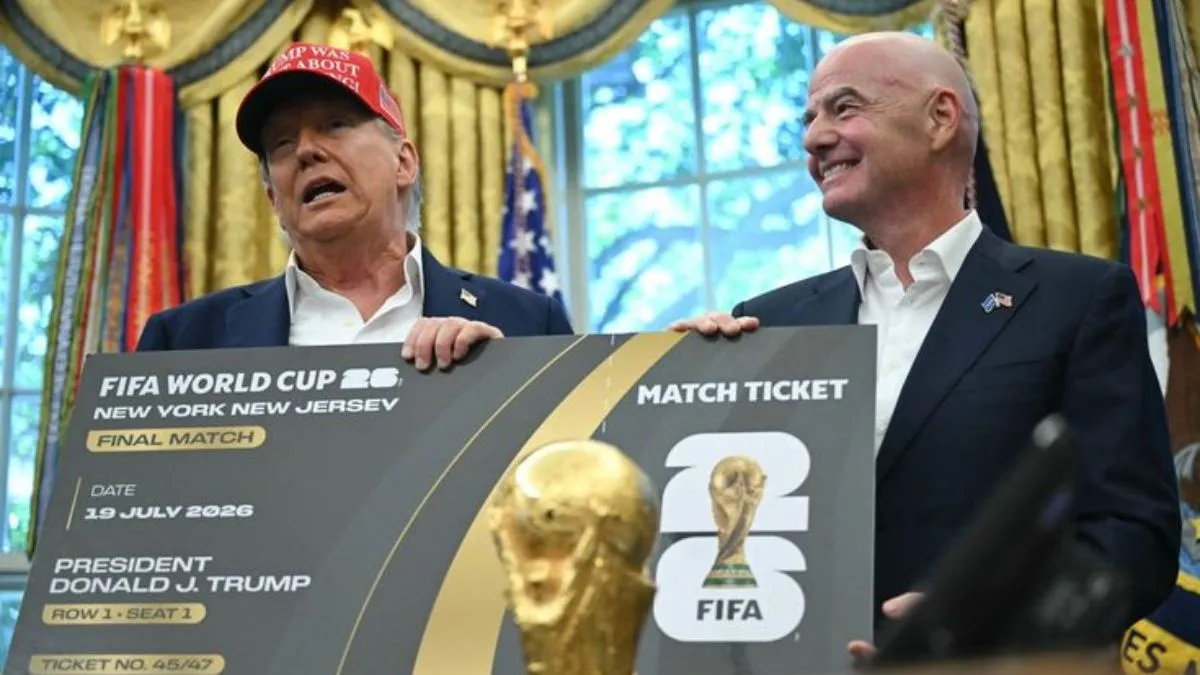
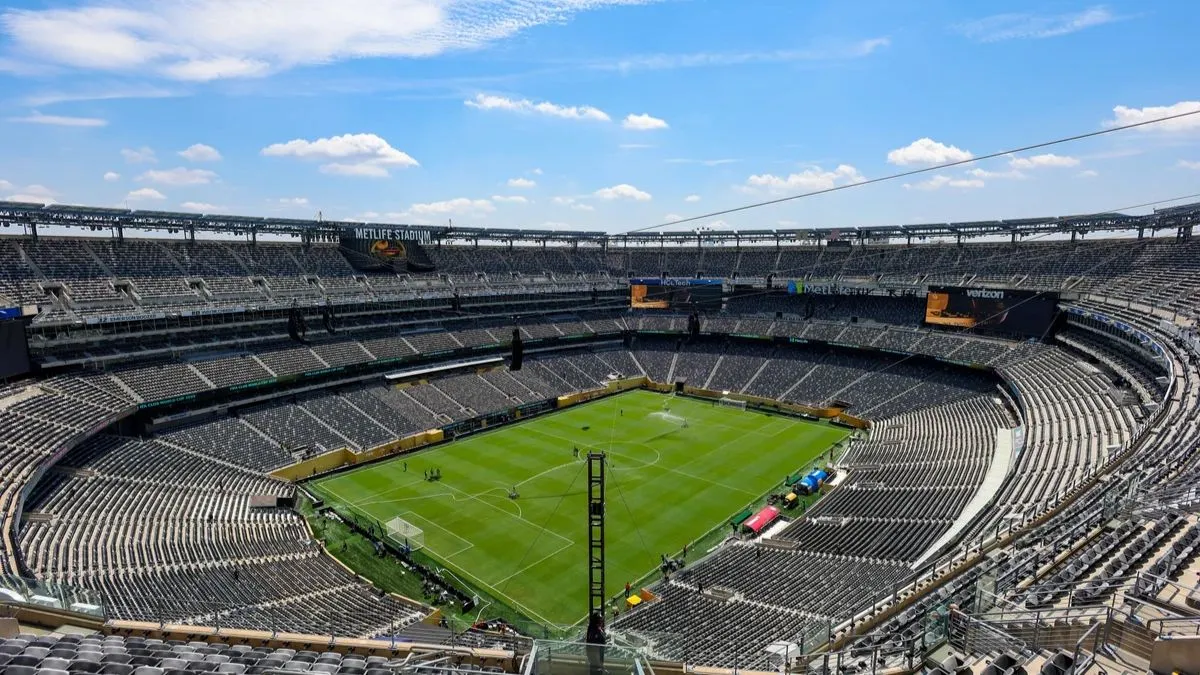
The final, scheduled for July 19, will be played at MetLife Stadium in East Rutherford, New Jersey — a venue FIFA is officially calling “New York New Jersey Stadium” for the duration of the tournament. With a capacity exceeding 82,000, it is the most prestigious stage football will play on this decade.
Estadio Azteca, meanwhile, will make its own piece of history when Mexico kicks off against South Africa on June 11 — becoming the first venue ever to host opening matches at three separate FIFA World Cups, having previously done so in 1970 and 1986.
What’s Still Happening With 27 Days to Go World Cup 2026
Venues in the Final Stretch
Despite years of planning, several venues are still in active preparation mode. In New Jersey, crews are in the process of laying a temporary natural grass surface over MetLife Stadium’s artificial turf to meet FIFA’s playing standards. In Miami, workers are dismantling the temporary infrastructure left over from the Formula One Grand Prix held earlier this month, racing to reconfigure Hard Rock Stadium for football operations.
Renovation work at Estadio Azteca in Mexico City has drawn particular scrutiny. The stadium’s refurbishment has faced delays and legal complications involving luxury box access rights, though Mexican organizers have publicly maintained the venue will be match-ready by opening day.
AT&T Stadium in Dallas — the largest venue of the tournament at a capacity of 94,000 — and SoFi Stadium in Los Angeles have already completed their preparations and passed early FIFA inspections.
Security: An Unprecedented Operation
The security operation surrounding this tournament may be without precedent in the history of sport. The U.S. Department of Homeland Security has designated the World Cup a National Special Security Event — a classification reserved for events of the highest national significance — placing the Secret Service in a lead coordination role across all American venues.
On May 12, the Office of the Director of National Intelligence hosted a counterterrorism symposium drawing more than 100 intelligence and law enforcement officers to coordinate threat assessments ahead of the tournament. The ODNI’s National Counterterrorism Center is now working directly with the White House Task Force established specifically for the World Cup.
In Houston, where seven matches are scheduled, city officials have disclosed that nearly $80 million in federal grants have been allocated to security operations alone — covering everything from anti-drone technology and bomb disposal units to expanded TSA lanes at airports. “Safety and security during FIFA World Cup 2026 in Houston is our number one priority,” the city’s Chief Safety and Security Officer Tommy Calabro said at a public briefing this week.
Canada, for its part, has allocated an estimated $145 million for tournament security operations across Toronto and Vancouver. Mexico is deploying close to 100,000 security personnel across its three host cities.
Ticketholders across all U.S. venues have been formally advised by FIFA and federal authorities to arrive at stadiums at least 90 minutes before kickoff due to enhanced screening procedures.
The Teams, the Groups, and the Stakes
The final draw, held in December 2025, produced 12 groups of four teams each. The top two from every group, plus the eight best third-place finishers, advance to a Round of 32 — a new knockout stage introduced alongside the expanded format.
Also Read: FIFA World Cup 2026 Extreme Weather Fears: Scientists Warn
A few group stage highlights that football fans globally are already circling on their calendars:
Group A features host nation Mexico alongside South Africa, South Korea, and Czechia — with Mexico’s opener on June 11 doubling as the tournament’s ceremonial kickoff at Azteca.
Group D contains the host United States, who face Paraguay, Australia, and Türkiye. Their group stage games are spread between Los Angeles and Seattle.
Canada competes in Group B alongside Bosnia and Herzegovina, Qatar, and Switzerland — playing their home games in Toronto and Vancouver.
Argentina’s opening match against Algeria in Kansas City has been widely flagged as a marquee group stage encounter, with Lionel Messi making what could be his final World Cup appearance.
Injuries, Selections, and the June 2 Deadline
Teams have until June 2 to submit their final 26-player squads. Before that deadline, they are permitted to name provisional rosters of up to 55 players — giving coaches flexibility to monitor fitness over the coming weeks.
Brazil have already absorbed significant injury blows, with defender Eder Militao and forward Rodrygo both confirmed out due to knee injuries. Goalkeeper Alisson Becker remains a doubt after a recurring hamstring problem. The Seleção, traditionally among the favourites, are entering the tournament with questions around their defensive spine.
Spain’s campaign received a boost with reports suggesting teenage sensation Lamine Yamal is on track to be fit after a minor injury scare. At 17, Yamal arrives in North America as arguably the tournament’s most-watched emerging talent.
The situation surrounding Iran has added geopolitical complexity to the tournament’s final preparations. Iran’s football federation confirmed participation after requesting guarantees from all three host nations covering visa access, security protections for players and staff, and assurances around the treatment of Iranian national symbols and the national anthem. FIFA president Gianni Infantino stated in April that Iran’s attendance was confirmed, and the team is scheduled to open Group G play against New Zealand in Los Angeles on June 15.
Fan Experience: Cities Preparing for Millions
Beyond the stadiums, host cities are investing heavily in the experience that comes before and after the final whistle.
FIFA’s official fan festivals — large outdoor venues screening matches on giant screens with live entertainment — are confirmed in multiple cities. Liberty State Park in Jersey City, Fairmount Park in Philadelphia, Fort York in Toronto, and East Downtown Houston are among the confirmed FanFest locations, with Houston’s setup running for the entire 39 days of the tournament.
Houston has also undertaken a significant infrastructure program around its downtown core, including 150 miles of resurfaced roads, nearly 30 miles of improved sidewalks, and a new pedestrian corridor dubbed “Via Football” designed to guide fans between the city center and the FanFest site in EaDo. Cooling stations and shade structures — capable of reducing sidewalk temperatures by up to 10 degrees — have been built to manage summer heat.
Ticket pricing this cycle has been significantly higher than in 2022, with FIFA implementing dynamic pricing for the first time. As of recent weeks, secondary market prices for high-profile knockout matches have soared, and the final is expected to be among the most expensive tickets in the history of live sport.
The Economic Footprint
FIFA has projected total revenue from the 2026 edition exceeding $11 billion. For host cities, the tournament represents a tourism and economic windfall. Dallas and Los Angeles are among the cities flagged by economists as best positioned to capture long-term benefit — Dallas because of its central geography and established convention infrastructure, Los Angeles because the World Cup dovetails with preparations for the 2028 Summer Olympics.
Airports across all three countries are bracing for what analysts are describing as one of the busiest sustained travel periods in North American aviation history. At Houston Hobby Airport alone, a direct airport-to-downtown bus route is being launched with coaches running every 30 minutes throughout the tournament.
Why This Moment Matters
Football arrives at a particular moment in North America. The sport has grown substantially in the United States since the 1994 tournament MLS has expanded from 10 to more than 30 teams, and American players now compete at the highest levels of European football. The 2026 World Cup represents, for many analysts, the culmination of a generational shift in the sport’s footprint on the continent.
For the global football community, the stakes are no less significant. With 48 teams competing, nations from across Africa, Asia, and the broader Americas have more representation than ever before. For a player in Cameroon, Saudi Arabia, or Bolivia, qualification to this tournament matters more than it did even eight years ago.
With 27 days to go, World Cup 2026 is no longer an event being planned — it is an event being lived, in real time, by billions of people across the planet.
Reporting compiled from FIFA official communications, U.S. Department of Homeland Security announcements, Office of the Director of National Intelligence public statements, Houston Host Committee briefings, and Associated Press coverage.