



Lakki Marwat Market Blast Kills Nine, Wounds Over Thirty in Khyber Pakhtunkhwa
Tuesday morning started like any other in Sarai Naurang’s busy bazaar — traders opening their stalls, motorcycles weaving through the narrow lanes, a woman making her way through the crowd. Then a bomb hidden inside a rickshaw detonated, and everything changed.
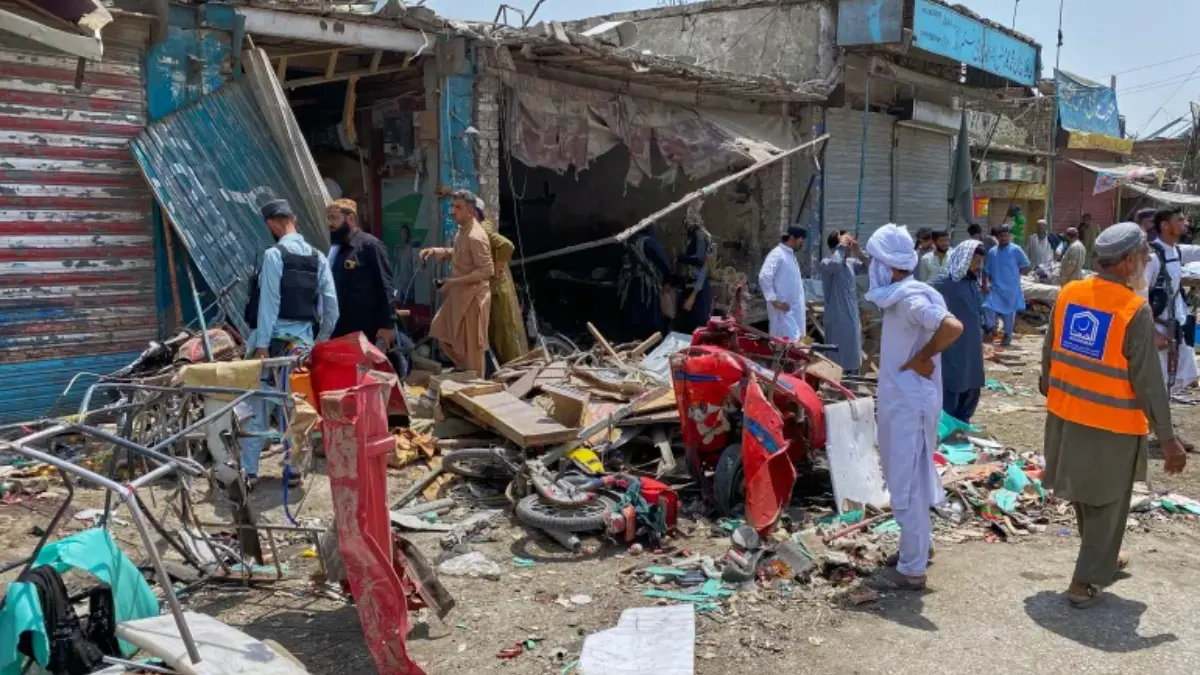
The Lakki Marwat market blast, which struck at the height of morning rush hour on May 12, 2026, killed at least nine people and left more than thirty others wounded. Among the dead were two on-duty traffic police officers and a woman. The injured included women and children — ordinary people who had no part in the conflict that keeps tearing through this corner of northwestern Pakistan.
Also Read: Islamabad Mosque Blast Kills Over 30 During Prayers
It was, by the grim standards of Khyber Pakhtunkhwa’s recent history, another Tuesday. But for the families of those killed, and for the survivors rushed to overwhelmed hospitals in Sarai Naurang and Bannu, it was the worst day of their lives.
The Lakki Marwat Market Blast: What Happened at Sarai Naurang
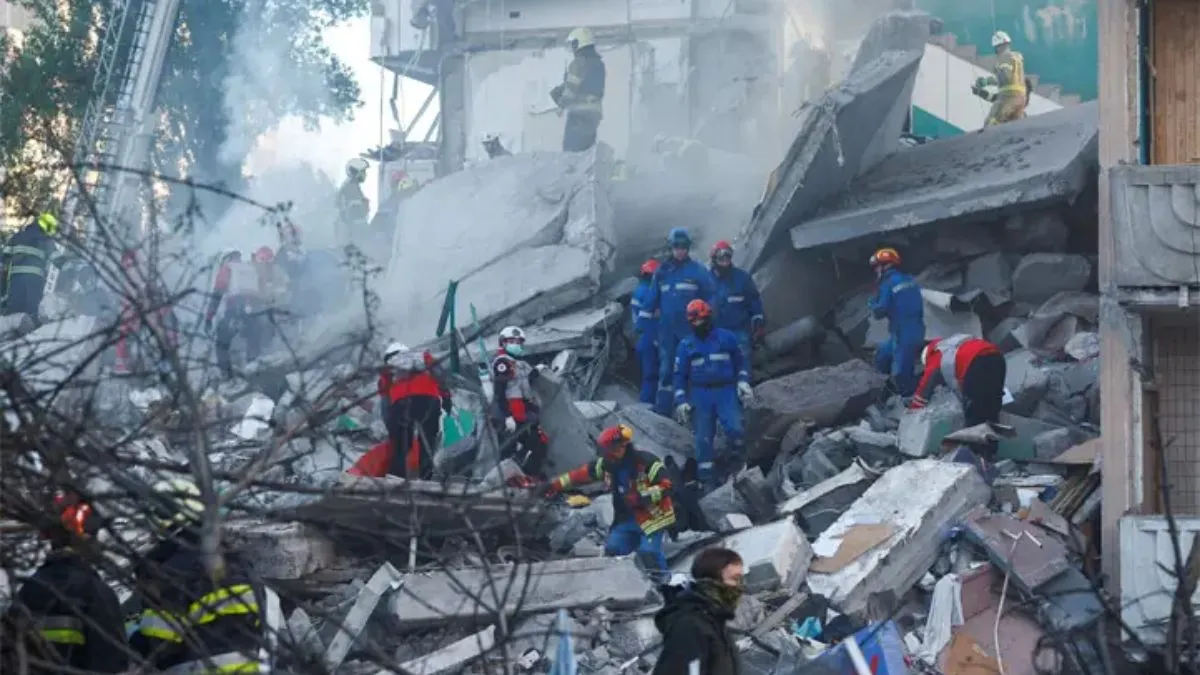
The explosion tore through Phattak Chowk, a busy intersection inside Naurang Bazaar in the Sarai Naurang area of Lakki Marwat district. According to police and emergency officials, a loader rickshaw packed with explosives was detonated during peak morning traffic — a moment designed to maximise casualties in a confined, crowded space.
District Police Officer Nazir Khan confirmed the death toll at nine, with eighteen others injured in the initial hours. Rescue 1122 — the provincial emergency response service — rushed ambulances and rescue teams to the site within minutes. The dead and critically wounded were transported to Naurang Hospital, while those with the most severe injuries were referred onward to hospitals in Bannu and Peshawar.
The medical superintendent of Tehsil Headquarters Hospital, Mohammad Ishaq, said the facility received thirty-seven patients. Several were in critical condition. Hospital authorities immediately imposed an emergency alert, calling in additional staff and appealing to local residents to donate blood. Hundreds answered that call.
The two police officers killed were identified as Adil Jan and Rahatullah — traffic constables who had been posted at the Sarai Naurang crossing and were, according to local police chief Azmat Ullah, the apparent primary targets of the attack.
The bombing also damaged a row of nearby shops. Most of the dead and wounded beyond the two officers were passersby — people with no connection to law enforcement, simply unlucky enough to be in the wrong place when the device went off.
Rickshaw Bomb: A Calculated Weapon in a Familiar Playbook
How a bomb gets into a bazaar matters, and in this case the choice of delivery vehicle was deliberate. Rickshaws — the three-wheeled motorised transport that millions of Pakistanis rely on daily — are everywhere in towns like Sarai Naurang. They carry passengers, goods, and groceries. They park freely. Nobody checks them.
That invisibility is precisely the point. Security analysts who track militant tactics in Khyber Pakhtunkhwa have noted for years that vehicle-borne improvised explosive devices, or VBIEDs, loaded into ordinary commercial vehicles are increasingly the weapon of choice for groups operating in the region. Unlike suicide vests, which require a human carrier willing to die on the spot, a bomb parked in a rickshaw can be detonated remotely or through a timer, allowing the attacker to survive and strike again.
Investigators from the Bomb Disposal Squad reached the scene and began collecting forensic evidence to determine whether the device was detonated by a suicide bomber in the vehicle or remotely triggered. As of Tuesday afternoon, that question had not been definitively answered. What was clear is that the bomb was assembled with enough explosive material to kill nine people and wound dozens more in an open-air market.
No Claim of Responsibility — but the Suspects Are Well Known
As of Tuesday evening, no militant group had formally claimed responsibility for the Lakki Marwat market blast. That silence is not unusual in the early hours after attacks of this nature in Khyber Pakhtunkhwa. Claims typically follow within twenty-four to forty-eight hours.
Suspicion falls squarely on Tehrik-e-Taliban Pakistan — the TTP — which the Pakistani government has officially designated as Fitna-al-Khawarij and formally banned. The TTP has been the driving force behind the sustained campaign of violence in KP’s southern districts, with Lakki Marwat and neighbouring Bannu among its most frequently targeted areas.
The timing of Tuesday’s attack makes the context even harder to ignore. Just three days earlier, on May 9, a suicide car bomb rammed into the Fateh Khel police checkpost in Bannu district, killing fifteen police officers. A newly formed militant faction called Ittehad-ul-Mujahideen Pakistan claimed that assault. Pakistani security officials say this group is a TTP affiliate — a splinter formation operating under the same ideological umbrella and, according to Islamabad, from the same geographic base across the border in Afghanistan.
Two deadly attacks on Pakistani security forces within seventy-two hours, in adjacent districts, is not a coincidence. It is a campaign.
Khyber Pakhtunkhwa’s Darkening Security Picture
To understand why the Lakki Marwat market blast happened, you have to understand where it happened — and what has been building there for years.
Lakki Marwat district sits in the southern belt of Khyber Pakhtunkhwa, roughly 80 kilometres from Bannu and not far from the former Federally Administered Tribal Areas — a patchwork of semi-autonomous territories that bordered Afghanistan and served for decades as a staging ground for various militant networks. The TTP emerged from these areas. It was weakened by military operations between 2009 and 2015, went partly dormant, then surged back to life after the Afghan Taliban retook Kabul in August 2021.
The numbers reflect what residents of these districts already know in their bones. According to Pakistan’s Annual Security Report 2025, fatalities from terrorist violence in Khyber Pakhtunkhwa climbed from 1,620 in 2024 to 2,331 in 2025 — a rise of more than 40 percent in a single year. In 2026, the pace has not slowed. Attacks in Bannu, Peshawar, Karak, Lakki Marwat, and Bajaur have all made headlines in recent months. Tuesday’s bazaar bombing adds to an already grim tally.
What makes the situation in Lakki Marwat particularly dangerous is the pattern of targeting. Earlier this year, militants carried out an IED attack on a police patrol in Shahbazkhel town in the same district, injuring five officers. A drone strike on relatives of a police peace committee killed two more civilians in the area. Now a market in the district’s commercial heart has been bombed during morning rush hour.
The message being sent — to police, to local government, to civilians who cooperate with security forces — is deliberate and unmistakable.
The Afghanistan Factor: Cross-Border Violence and Diplomatic Fallout
No account of the Lakki Marwat market blast is complete without addressing the larger geopolitical crisis that frames it.
Pakistan has maintained for years that the TTP operates from sanctuaries inside Afghanistan, planning and launching attacks across the border. Islamabad’s position has hardened considerably over the past year. Following the Bannu attack on May 9, Pakistan’s Foreign Office summoned Afghanistan’s chargé d’affaires and formally conveyed, based on technical intelligence and investigation findings, that the assault had been masterminded by militants sheltering on Afghan soil.
Afghanistan’s Taliban government rejected the accusation. Taliban spokesperson Zabihullah Mujahid dismissed Pakistan’s claims as baseless, reiterating Kabul’s longstanding position that it does not allow its territory to be used for attacks against other countries.
Relations between the two neighbours have deteriorated sharply. From late 2025 onward, Pakistani and Afghan forces engaged in some of their most serious cross-border military clashes in years — fighting that has cost hundreds of lives on both sides and, according to a report released Tuesday by the United Nations Assistance Mission in Afghanistan, killed at least 372 Afghan civilians in the first three months of 2026 alone. More than half of those deaths, UNAMA said, were attributable to a single Pakistani airstrike on a drug rehabilitation facility in Kabul on March 16. Pakistan denied deliberately targeting civilians.
China stepped in to mediate, hosting talks between Pakistani and Afghan officials in early April. Both sides described those discussions as constructive. But attacks like Tuesday’s blast in Sarai Naurang demonstrate just how fragile any progress remains.
What This Means for Pakistan — and Why the World Should Pay Attention
Bombings in Khyber Pakhtunkhwa rarely dominate global headlines for long. They are, unfortunately, too frequent. But the Lakki Marwat market blast and the broader pattern it represents carry implications far beyond a single district in northwestern Pakistan.
Pakistan is home to nearly 250 million people and is a nuclear-armed state. When civilian markets in its cities and towns can be bombed with relative impunity, it is not just a security failure — it is an institutional crisis. The ability of the state to protect its citizens in public spaces is one of the most basic measures of governance. By that measure, the government in Islamabad and the provincial administration in Peshawar have serious questions to answer.
There is also the regional dimension. The TTP’s capacity to sustain a high-tempo campaign of attacks inside Pakistan — while simultaneously exploiting diplomatic tensions between Islamabad and Kabul — creates conditions for further instability across the entire Afghanistan-Pakistan border zone. That zone has been a source of global security concern since long before 2001. It has not become less dangerous.
For the international community, particularly countries with strategic interests in South and Central Asia, Tuesday’s attack is another indicator that the post-2021 security environment in this region is deteriorating, not stabilising.
The People Behind the Numbers
There is a risk, in reporting on attacks like this one, of reducing human beings to data points. Nine killed. Thirty-plus wounded. Toll may rise.
Adil Jan and Rahatullah were not data points. They were police officers doing their jobs at a traffic post in a market. The woman killed in the blast had a name and a family. The injured women and children who were rushed to Naurang Hospital were not abstractions — they were people with lives interrupted, bodies broken, and futures suddenly uncertain.
The residents of Sarai Naurang who ran to the hospital to donate blood on Tuesday morning deserve to be part of this story too. In the middle of chaos and grief, they showed up. That kind of civic response does not get enough coverage in international reporting on Pakistan.
Conclusion
The Lakki Marwat market blast of May 12, 2026, is the latest in a sustained wave of militant violence that is bleeding Khyber Pakhtunkhwa dry — in lives, in public confidence, and in the state’s credibility as a provider of basic security.
Nine people went to a bazaar on a Tuesday morning and did not come home. Dozens more are recovering in hospitals. The bomb that killed them was placed there by people who regard a busy marketplace as an appropriate target.
Pakistan’s government must now confront the same questions it has faced after every such attack: how to dismantle the militant networks responsible, how to manage a deteriorating relationship with Afghanistan that enables those networks, and how to reassure the citizens of places like Lakki Marwat that their lives matter to the people in power.
Those are not easy questions. They do not have quick answers. But the people of Sarai Naurang — and of every other district in Khyber Pakhtunkhwa that lives under this shadow — deserve to know that someone is genuinely trying to find them.