



US Conducts Venezuela Strikes, Trump Claims Maduro in Custody
The United States announced a large-scale military strike on Venezuela on Saturday. President Donald Trump said US forces captured Venezuelan President Nicolás Maduro and were transferring him to the United States to face criminal charges. The statement marks a major escalation in US pressure on the Maduro government.
Also Read: US Intelligence: Putin Ukraine War Goals Remain Unchanged
Trump said the operation targeted Venezuelan military infrastructure. He said Maduro and his wife, Cilia Flores, were being taken to New York for trial on US drug and weapons charges. Venezuelan authorities have disputed the claim and said Maduro’s whereabouts are unknown.
Details of the Alleged Capture Operation
US officials said the operation involved American special operations forces, supported by intelligence gathered over several days. According to individuals briefed on the matter, a CIA source within the Venezuelan government helped track Maduro’s movements prior to the strike. Trump later told US media that Maduro and Flores were initially taken to the USS Iwo Jima, one of several US warships operating in the Caribbean, before arrangements were made to move them to the United States.
Attorney General Pam Bondi said on social media that indictments had been secured against Maduro and Flores, adding that they would “face the full wrath of American justice.” Venezuelan authorities, however, disputed the US account and demanded proof that Maduro was alive, saying his whereabouts were unknown.
Strikes on Caracas and Civilian Impact
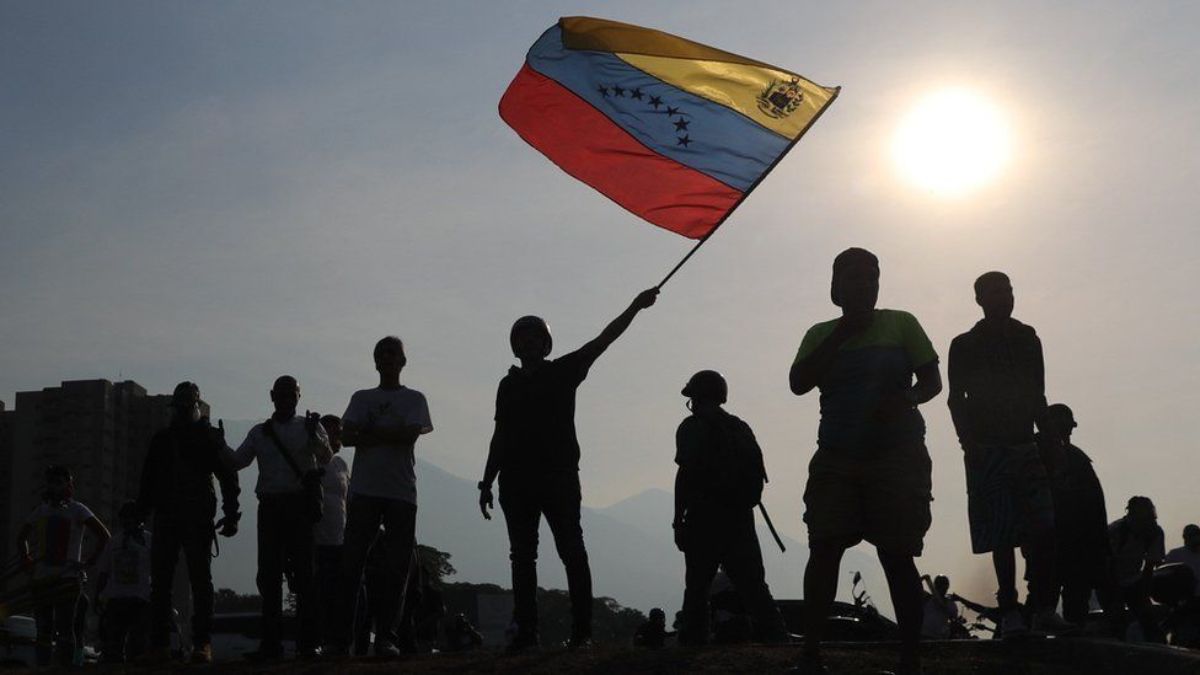
Residents in Caracas reported being jolted awake by loud explosions as US strikes hit what Washington described as Venezuelan military targets. Videos and photographs circulating online showed people fleeing streets amid panic and confusion. The Venezuelan government accused the United States of striking both military and civilian sites, calling the attack an act of aggression and a violation of international law.
The strikes form part of what US officials describe as months of military escalation in the region. In recent weeks, the United States has deployed its largest military presence in decades to the Caribbean and surrounding areas, including warplanes, helicopters, thousands of troops, and an aircraft carrier. Washington has also conducted dozens of maritime operations targeting suspected drug trafficking vessels, operations that reportedly resulted in more than 100 deaths.
Regime Change Fears and Political Uncertainty
The US attack on Venezuela has intensified concerns that Washington’s actions are aimed at regime change, not just law enforcement. While the US has long accused Maduro’s government of corruption and narcotics trafficking, critics argue that physically removing a foreign leader sets a dangerous precedent.
Inside Venezuela, the situation remains highly uncertain. The United States has signaled support for the Venezuelan opposition, which has been seeking to remove Maduro through political pressure and international backing. Possible transition figures include opposition leader María Corina Machado and former presidential candidate Edmundo González. However, analysts warn that a swift transfer of power is far from guaranteed.
Maduro’s government has maintained tight control over key institutions, including the military, judiciary, and Supreme Court, and is supported by armed pro-government groups known as colectivos. Even some Venezuelans who oppose Maduro fear that US military intervention could trigger internal conflict, violent fragmentation, or a prolonged power struggle.
Regional and International Reaction
Reaction across Latin America has been mixed. While Maduro has relatively few close allies in the region, major countries such as Brazil and Colombia have expressed opposition to direct US military intervention. Many governments remain wary due to the region’s history of US-backed coups and interventions during the 20th century.
Also Read: US Pushes International Gaza Force Deployment in Early 2026
The crisis also comes as President Trump has taken a more assertive stance across Latin America, including economic pressure on Brazil, financial backing for Argentina, and closer ties with right-leaning governments elected in recent years. Despite these alliances, Trump’s actions have drawn criticism even within his own political base, with some supporters questioning whether the intervention contradicts his “America First” stance.
Oil, Resources, and Strategic Interests
Venezuelan officials have accused the United States of using the crisis as a pretext to seize control of the country’s vast oil reserves, the largest proven reserves in the world. Caracas claims US forces have already seized at least two Venezuelan oil tankers off the coast, reinforcing suspicions that economic interests are intertwined with military action.
Washington has not confirmed these allegations, but the issue of energy security and regional influence continues to shape perceptions of the conflict.
What Happens Next?
What follows the US attack on Venezuela remains unclear. Key questions include whether the United States will push for internationally supervised elections, seek further arrests of senior Venezuelan officials, or apply pressure for a negotiated transition. For Maduro’s allies, the events raise fears of prosecution and retaliation, making any peaceful settlement more difficult.
As explosions fade and diplomatic tensions rise, Venezuela stands at a crossroads. Whether this moment leads to political change, deeper instability, or prolonged confrontation will depend on decisions made in Washington, Caracas, and across the region in the days ahead.