






Trump World Cup 2026
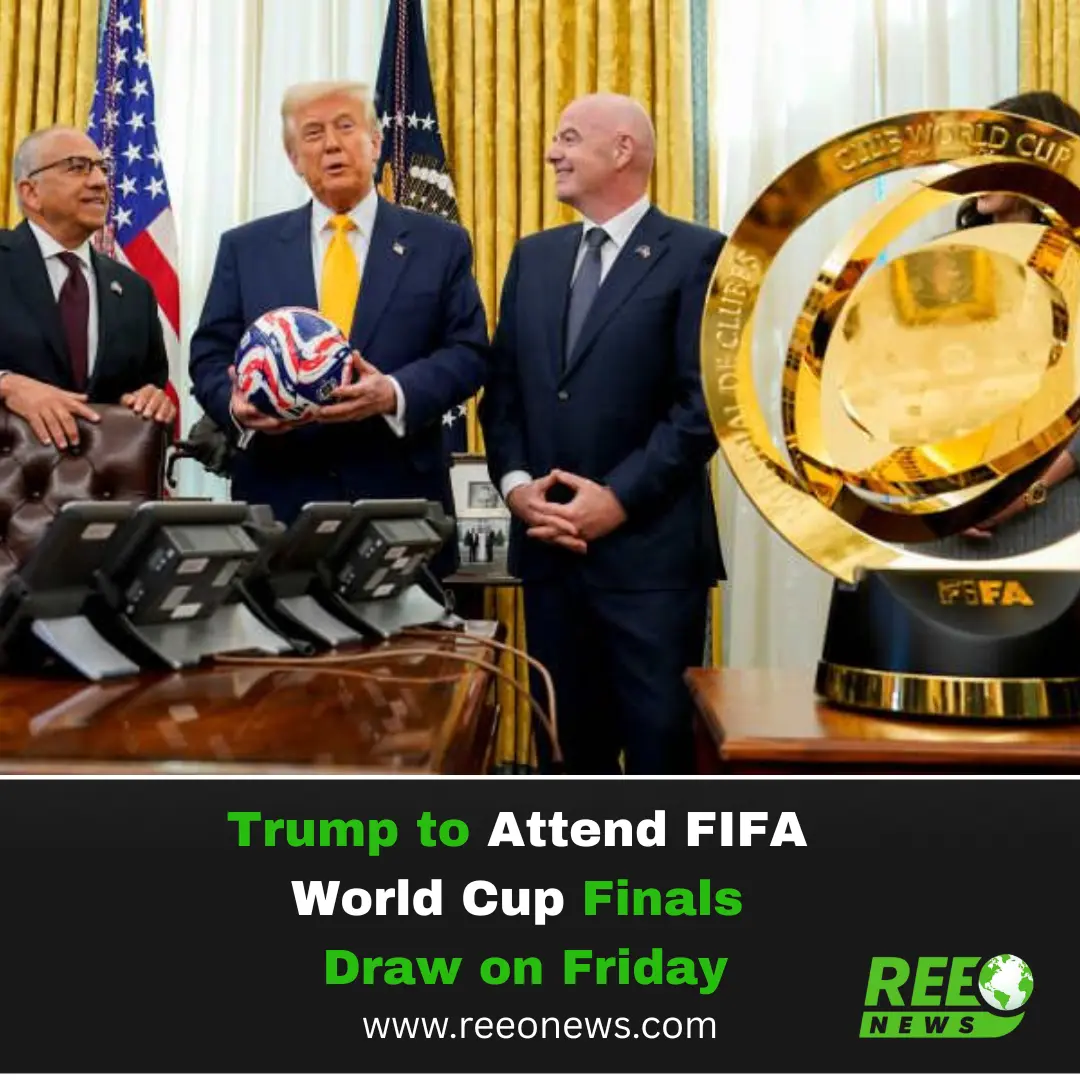
The White House has officially confirmed that U.S. President Donald Trump will attend the FIFA World Cup 2026 finals draw, scheduled for this Friday at the Kennedy Center in Washington, D.C. The announcement has added intense political and global media attention to an already high-profile event, as the United States prepares to co-host the world’s biggest football tournament alongside Canada and Mexico.
White House Press Secretary Karoline Leavitt announced the news on Monday, emphasizing the significance Trump places on the upcoming World Cup. According to Leavitt, the president views the tournament as a centerpiece of his second term and a major part of the United States’ 250th anniversary of independence, set to be celebrated next year. “On Friday, President Trump will attend the FIFA World Cup final draw at the Kennedy Center,” she told reporters during a press briefing.
The president’s presence at the ceremony marks an important moment for the host nations as they finalize preparations for the expanded 48-team tournament, which will be the largest in FIFA history. However, the build-up to the event has not been without political turmoil. Trump’s firm stance on crime, immigration, and governance in certain American cities has created tension around the organization of the competition, drawing mixed reactions across the political spectrum.
Political Tension Surrounding the Tournament
While the 2026 FIFA World Cup is generally seen as a unifying global event, its planning phase has been underscored by domestic political disagreements. Trump, a Republican, has been outspoken in recent months about rising crime rates and illegal migration in several U.S. cities, many of which are run by Democratic administrations. These comments have fueled political debate, as Trump suggested that games scheduled in some of these locations could potentially be moved if local conditions do not meet the security standards he expects.
His remarks have been met with criticism from some city officials, who argue that raising the possibility of relocating matches creates unnecessary instability at a crucial stage of planning. Others, however, support Trump’s emphasis on safety and preparedness, noting that a successful World Cup requires strong security measures and effective city governance.
This political backdrop has added an extra layer of scrutiny to Friday’s draw, as the eyes of the sporting world turn to the United States. With global audiences, international media, and football federations watching closely, Trump’s involvement ensures that political narratives will continue to intersect with sports coverage as the tournament approaches.
Read Also: UEFA Europa League: Battle for Rising Champions
A Historic World Cup for North America
The 2026 edition is set to be the first FIFA World Cup hosted by three nations simultaneously: the United States, Canada, and Mexico. It will also feature an expanded format with 48 teams, up from the traditional 32, making it the biggest football event ever organized. The expansion is expected to increase fan engagement, tourism revenue, and global participation, further raising the stakes for host cities and organizers.
The U.S. will host the majority of the matches, including the final. Cities such as Los Angeles, New York, Dallas, Atlanta, and Miami have been preparing for months, upgrading stadiums, transportation networks, and fan zones to accommodate the influx of international visitors. This World Cup is projected to draw millions of fans and generate billions of dollars in economic activity across North America.
Understanding the Draw Process: Trump World Cup 2026
Friday’s draw will play a crucial role in shaping early expectations for the tournament. FIFA’s draw procedure places teams into four pots based on rankings and host status. Pot 1 includes the three host nations—United States, Canada, and Mexico—along with the top four ranked teams in the world: Spain, Argentina, France, and England. These elite teams are placed in separate groups to ensure balanced competition and avoid early clashes between tournament favorites.
Teams in Pots 2, 3, and 4 are then drawn according to a set of confederation-based rules. FIFA regulations prevent two teams from the same confederation (except UEFA) from being placed in the same group, ensuring global representation across each group. With 48 teams participating, Friday’s draw will create 12 groups of four teams each, marking the beginning of predictions, excitement, and controversy among fans and analysts worldwide.
One key change for the 2026 World Cup is that the highest-ranked teams—Spain, Argentina, France, and England—are strategically separated, allowing them to meet only from the semifinal stage onward. This structure is designed to maintain suspense deep into the tournament and maximize competitive balance.
The Significance of Trump’s Attendance
Trump’s presence at the draw underscores the political and cultural importance he attaches to the World Cup. Supporters view his engagement as a sign of strong national commitment to hosting the biggest sporting event in U.S. history. They also argue that Trump’s involvement brings global attention and demonstrates that the U.S. is prepared to deliver a secure and memorable tournament.
Critics, however, caution that injecting politics into sports events may overshadow the spirit of unity the World Cup represents. Some fear that Trump’s controversial comments about host cities could disrupt planning or create friction between federal and local authorities.
Regardless of political perspective, Trump’s attendance guarantees intense media coverage, shaping the narrative heading into a tournament expected to draw record-breaking viewership worldwide.
Global Anticipation Builds
With 48 teams, expanded venues, and three host countries, the 2026 FIFA World Cup is poised to be the largest celebration of football ever staged. Friday’s finals draw will formally set the stage for the competition, giving teams and fans their first glimpse of the path to the knockout rounds. National morale, fan expectations, and early tournament predictions will all take shape following the draw ceremony.
As the United States prepares to welcome the world, Trump’s appearance at the event adds another dramatic chapter to the build-up. Whether celebrated or contested, his involvement is certain to influence the political and public conversation surrounding the global tournament.
With anticipation rising and global excitement building, the FIFA World Cup 2026 is now firmly in the spotlight—politically, culturally, and athletically.