









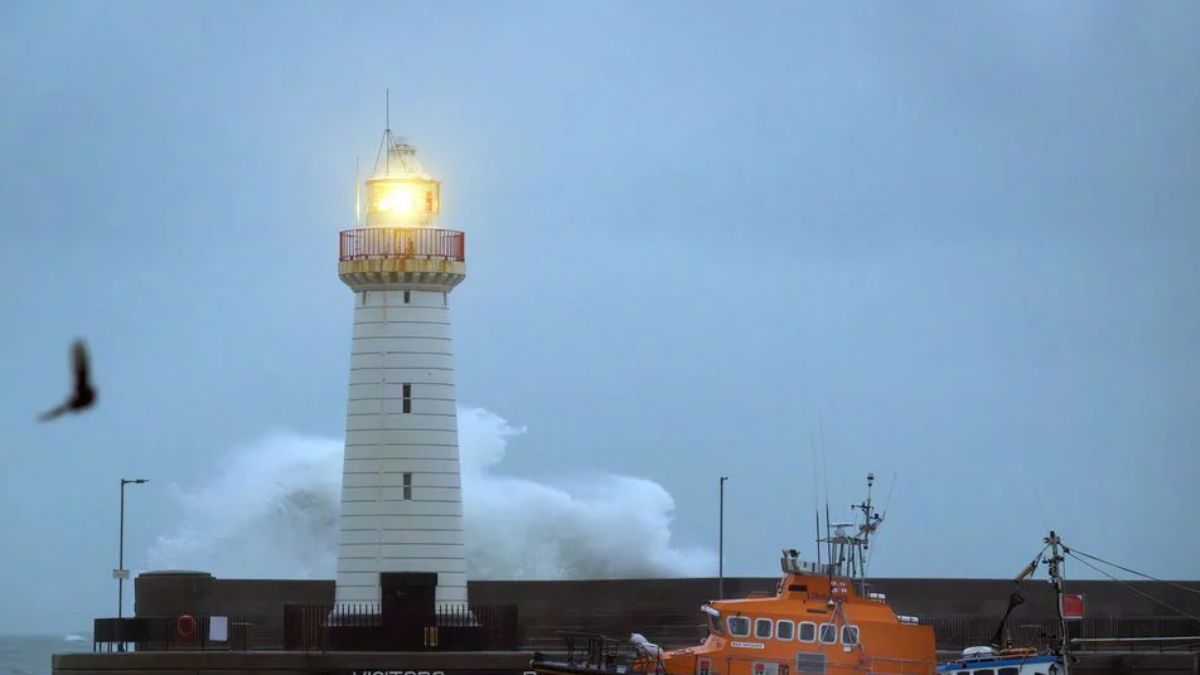
The UK is grappling with yet another bout of severe weather as Storm Chandra tears through the country, leaving a trail of flooding, blocked roads, and shuttered schools in its wake.
Also Read: UK Weather: Snow Warnings as Cold Snap Tightens Grip
This marks the third major storm to batter Britain this month, following the destructive paths of Storms Ingrid and Goretti. And for many communities still recovering from those earlier hits, Chandra couldn’t have come at a worse time.
Red Alert Issued for Devon River Town
The situation turned critical on Tuesday morning when the Environment Agency issued a rare red flood warning for Ottery St Mary in Devon. The River Otter burst its banks, creating what authorities described as “deep and fast-flowing” floodwater that posed a direct danger to life.
Residents in threatened parts of the town were urged to evacuate immediately, moving family members, pets, and vehicles to safety. Emergency services advised people to shut off gas, electricity, and water supplies before leaving their homes.
“We are experiencing an increase in reports of people coming up against flood water,” a Devon and Cornwall Police spokesman told Reeo News. “Please do not attempt to drive through it.”
The red warning represents the most serious level of flood alert in the UK system, reserved for situations where flooding is expected to cause significant threat to life.
Nearly 250 Schools Shut Down
Northern Ireland bore the brunt of Storm Chandra powerful winds, with almost 250 schools forced to close on Tuesday due to what education officials called “severe weather conditions.”
The Met Office issued an amber wind warning for the eastern coast of Northern Ireland, predicting gusts reaching up to 75mph in some coastal locations. The warning remained in force from 5am to 9pm on Tuesday.
What made these winds particularly dangerous was their unusual direction. Instead of the typical westerly gales, Chandra brought easterly and southeasterly winds, meaning areas that normally enjoy natural shelter found themselves exposed.
“Easterly winds of this strength are unusual and are likely to be impactful,” the Met Office noted in its advisory.
Travel Networks Grind to a Halt
The storm created widespread chaos across the UK’s transport infrastructure. The M48 Severn Bridge connecting England and Wales was completely closed on Tuesday morning due to dangerous wind conditions, forcing traffic to divert over the M4 Prince of Wales Bridge.
Further north, the Humber Bridge banned all high-sided vehicles from crossing, while the A66 trans-Pennine route was shut down between County Durham and Cumbria as snow began to pile up.
In Devon, the situation grew so dire that police issued an extraordinary plea for people to stay home. “Please do not travel in those areas – Exeter, East and Mid Devon – at this time unless you urgently need to,” authorities warned.
Sections of major roads in Dorset, Somerset, and east Devon were underwater. In Wales, Gwent Police reported the A40 was impassable between Abergavenny and Raglan due to flooding.
Rail passengers didn’t fare much better. National Rail warned that South Western Railway services would likely face disruptions throughout the day, advising travelers to check their routes before setting out.
Rain Hammers Already Saturated Ground
South-west England found itself under an amber warning for rain on Tuesday morning, covering parts of Cornwall, Devon, Dorset, and Somerset. Forecasters predicted 30 to 50 millimeters of rainfall across these areas, with some higher ground—particularly south Dartmoor—expected to see between 60 and 80 millimeters.
Also Read: Snow and Ice Warning for 2 jan, West Midlands and UK Areas
The problem wasn’t just the volume of rain. It was falling on ground already saturated from the previous two storms.
Met Office chief forecaster Paul Gundersen explained the challenge: “Heavy rain is an additional hazard as it falls on saturated ground in Dorset and southern parts of Devon, Somerset and Cornwall.”
By Tuesday morning, England had nearly 100 flood warnings in effect—meaning flooding was expected—and close to 200 flood alerts indicating flooding was possible. Wales had 17 flood alerts active.
Snow Blankets Northern Routes
While the south dealt with rain and flooding, northern parts of the UK faced a different threat: snow.
Yellow warnings for rain and snow covered the Pennines and south-west Scotland, where forecasters predicted up to 5 centimeters of snow widely, with accumulations reaching 20 centimeters on higher ground.
This put major transport routes at risk, including the A57 Snake Pass, A66, A68, and even sections of the M62 motorway. Blizzard-like conditions were possible in some exposed areas.
National Highways urged drivers traveling across the Pennines to “plan ahead and consider alternate routes.”
Communities Still Reeling from Previous Storms
What makes Storm Chandra particularly cruel is its timing. Parts of south-west England are still recovering from Storms Goretti and Ingrid, which struck earlier this month.
Storm Goretti was described by the Met Office as one of the most impactful storms to hit Cornwall and the Isles of Scilly in 30 to 35 years. Winds reached 99mph, thousands of trees came down, and entire communities were left without power, water, and internet for days.
Now those same vulnerable areas were facing another battering. The Met Office warned that the Isles of Scilly, western Cornwall, and south-west Wales could see gusts between 70 and 80mph.
What the Met Office Says
The Met Office issued multiple warnings across the UK, with the amber alerts for rain and wind representing the second-highest level of concern.
Officials warned that strong winds could lead to flying debris, damage to buildings including tiles blown from roofs, and dangerous coastal conditions. There was a genuine “danger to life” from both the winds and potential flooding.
The agency’s messaging was clear: take these warnings seriously and avoid unnecessary travel in affected areas.
As Storm Chandra continues to move across the UK, authorities are monitoring river levels closely and coordinating emergency responses. The storm serves as a stark reminder of Britain’s vulnerability to extreme weather events, particularly when they arrive in rapid succession.