








Safe City camera privacy
Pakistan’s Safe City surveillance network has rapidly expanded over the last decade, transforming urban policing into a highly digitized and centralized system. The Punjab Safe Cities Authority (PSCA) has marketed this transformation as the “Beginning of a New Police Culture,” promising efficient crime prevention, quick emergency response, and a modern relationship between citizens and law enforcement. Yet a new feature added to the PSCA’s “Public Safety App” has reignited public concerns about surveillance, privacy, and the true costs of this security-centered experiment.
Under the recent app update, citizens can now stream live video directly from their mobile phone cameras to the Safe City control room during emergencies. After placing a call to Pakistan’s emergency helpline 15, users receive a link that, once clicked, activates their camera and begins transmitting live footage to the authorities. The police describe it as a major step toward faster verification of incidents and quicker dispatching of help. But civil rights advocates, privacy experts, and ordinary citizens see a different picture: one of unchecked digital surveillance, weak data protection laws, and a dangerous precedent of state access to personal cameras.
How the Feature Works — and Why It Alarms Many
The new live-camera streaming feature functions as a remote verification tool. If someone is being robbed, assaulted, harassed, or facing a medical emergency, they can initiate a call to 15. The operator then sends a secure link. Opening it instantly activates the phone’s camera and transmits real-time footage to the PPIC3 (Punjab Police Integrated Command, Control and Communication Centre).
In theory, this is a powerful tool. Real-time visuals could help officers confirm threats, identify assailants, understand the environment, and deploy appropriate help. For crimes like street harassment, break-ins, or vehicle snatching, a live feed could make the difference between life and death.
But the technology also invites serious questions:
Who exactly has access to the live stream?
Is the footage recorded, stored, or archived?
If stored, for how long and under what laws?
What prevents misuse, leaks, or unauthorized access?
Are there audit logs or accountability mechanisms?
These questions matter because Pakistan has no comprehensive data protection law actively enforced, and the existing draft legislation has been widely criticized for providing the state with sweeping surveillance powers rather than protecting citizens.
Inside Pakistan’s Safe City Network
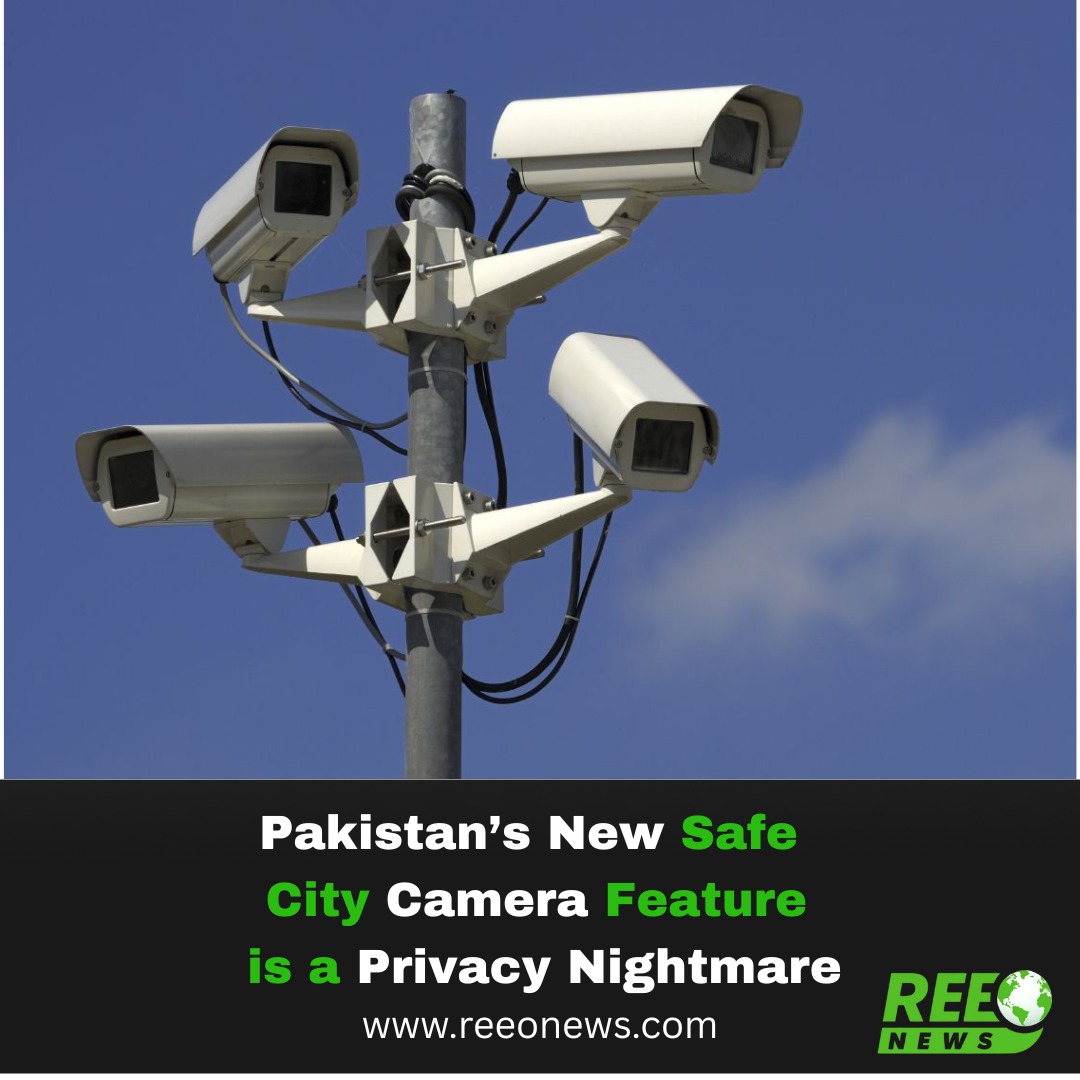
To understand the stakes, one must look inside the Safe City system itself. The PPIC3 centers in Lahore and Islamabad resemble command hubs from a dystopian sci-fi film: towering walls of screens, multiple monitoring stations, facial recognition alerts, vehicle tracking dashboards, and automated threat detection tools. Over 8,000 cameras — many with intelligent features — watch major roads and intersections across Lahore. Similar systems are being set up or expanded in Rawalpindi, Faisalabad, Multan, Sargodha, Gujranwala, Bahawalpur, and Karachi.
The government presents these systems as a symbol of modernization. Students, politicians, diplomats, influencers, and journalists regularly take guided tours of these centers, reinforcing a public narrative of high-tech progress.
But the sophisticated technology is not locally developed. Instead, it is built on Huawei’s “Safe City Solution,” a surveillance infrastructure deployed in dozens of countries, especially across Asia and Africa. Pakistan’s first Safe City project in Islamabad (costing over USD $125 million) emerged after the 2008 Marriott bombing and was completed by NADRA and Huawei in 2016. Lahore’s PPIC3 followed soon after, with Huawei securing the contract for Rs 12 billion.
Since then, nearly every major city has been targeted for similar installations, many funded by government budgets or foreign loans. Tens of thousands of cameras will eventually blanket Pakistan’s urban centers.
A Vision of Safety — Or Surveillance?
The official narrative is compelling. Safe City systems claim to offer:
Crime deterrence
Faster emergency response
Better traffic management
Automated criminal identification
Improved coordination between police and rescue services
In principle, these outcomes could transform policing in a country long plagued by inefficiency, corruption, and bureaucratic hurdles. A system that responds quicker and documents events accurately could rebuild public trust.
However, the government’s expansive surveillance ambitions come with major trade-offs. Most Safe City benefits remain largely aspirational, while the risks are immediate and real.
The Privacy Nightmare at the Heart of Safe City
1. No Meaningful Data Protection
Pakistan lacks enforceable data privacy laws. There is no independent authority overseeing how police collect, store, or share user data. Without such protections, citizens have no legal recourse if their private footage is misused.
2. Unlimited and Unchecked Camera Access
By enabling police to access a citizen’s personal device camera — even voluntarily — a dangerous precedent is set. Future expansions or misuse could blur the line between voluntary consent and coercion.
3. Risk of Harassment, Blackmail, and Misuse
Pakistan has a documented history of sensitive videos and images being leaked from government departments, police stations, and even intelligence agencies. A live personal-camera feed from a vulnerable citizen risks:
Capturing inside homes or private places
Recording family members, including women
Exposing victims of harassment or domestic abuse
Being saved, shared, or leaked illegally
Without strong safeguards, such risks are not hypothetical — they are inevitable.
4. Mass Surveillance Without Oversight
Safe City systems already use facial recognition, gait analysis, vehicle tracking, and AI-based alert systems. Adding personal-camera live feeds dramatically expands the surveillance network into the private domain.
5. Potential for Political Misuse
Surveillance systems globally have been used to target:
Political opponents
Journalists
Activists
Minority groups
In a country with a history of political victimization, unchecked surveillance powers amplify these risks.
Lessons From Global Smart-City Failures
Around the world, smart-city projects—from the UAE to India to Uganda—have faced backlash for:
Mass surveillance
Data misuse
Racial profiling
Weak oversight
Lack of transparency
Even in advanced democracies, such surveillance systems face strict regulations. Pakistan, with limited legal protections, is even more vulnerable.
Safe City as Public Infrastructure — and Public Responsibility
These systems are funded through taxpayers’ money. They are therefore public infrastructure, not military secrets. Citizens deserve full transparency:
Independent audits
Public reporting on data usage
Clear retention and deletion policies
Independent complaint mechanisms
Legislative oversight
Without these, Safe City becomes a powerful surveillance machine with no democratic accountability.
The Balance Pakistan Must Strike
Security is important — but not at the cost of civil liberties. Pakistan must adopt:
Clear consent-based data access
Strong data protection laws
Time-bound and purpose-bound usage of live feeds
Independent oversight committees
Strict penalties for misuse
Transparency reports on data use and retention
The live-camera feature could be beneficial — but only if citizen privacy and safety are truly protected.
Conclusion
Pakistan’s Safe City model is a bold experiment in tech-driven policing. But the new live camera streaming feature crosses a dangerous line. Without robust safeguards, oversight, and public transparency, it risks becoming a privacy nightmare. If Pakistan wants a safer future, it must build systems that protect both security and fundamental freedoms — not sacrifice one for the other.