









Rajab Moon Sighted in Abu Dhabi as Experts Urge Science-Based Observations
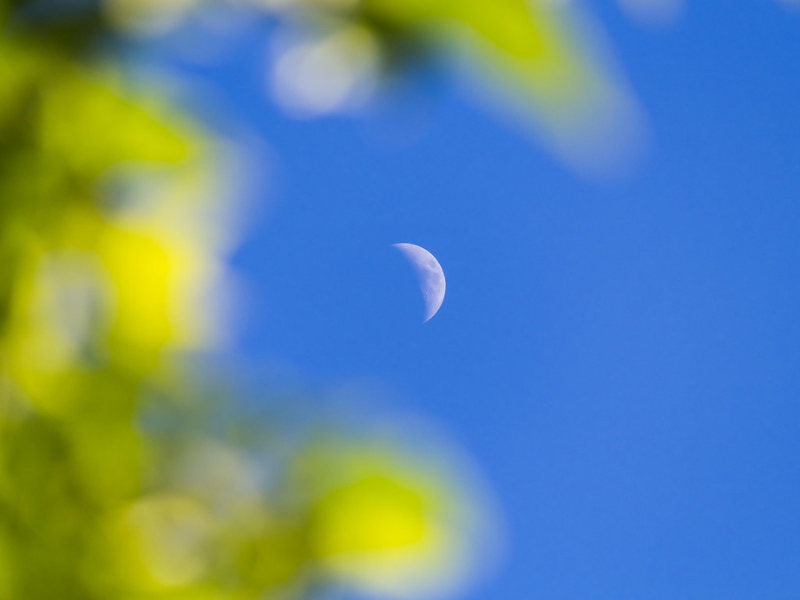
Abu Dhabi: The crescent moon marking the start of Rajab, the seventh month of the Islamic calendar, was sighted in Abu Dhabi, confirming Sunday as the first day of the sacred month.
Rajab is one of Islam’s four sacred months and signals the beginning of the spiritual countdown toward Ramadan. With Rajab now underway, Muslims enter the final preparatory phase ahead of the fasting month, which follows Rajab and the subsequent month of Sha’ban.

If both Rajab and Sha’ban last 29 or 30 days, Ramadan is expected to begin in approximately 60 to 61 days. As with all Islamic months, the exact start of Ramadan will depend on official moon sightings closer to the time.
Also Read: Punjab Sahulat Bazaar Expansion Pledged by Maryam Nawaz
Scientific documentation of the crescent
In Abu Dhabi, the Rajab crescent was also documented using astronomical methods. The Al Khatim Astronomical Observatory, affiliated with the International Astronomy Centre, successfully photographed the daytime crescent of Rajab 1447 AH on December 20, 2025, at 4:30 p.m. UAE time. At the time of imaging, the moon was positioned 6.7 degrees away from the sun.
The observation was conducted by a team including Osama Ghannam, Anas Mohammad, Khalafan Al Naimi, and Mohammed Awda.

Evening sighting deemed impossible
Despite the confirmed start of Rajab in some countries, astronomy experts stressed that claims of an evening crescent sighting on December 20 were scientifically impossible in the Arab region.
Mohammed Shawkat Odah, director of the International Astronomy Centre, said the crescent could not have been seen that evening anywhere in the Arab world, either with the naked eye or using telescopes. He explained that theoretical visibility was limited to small areas of southern and south-western Africa, where very few observers are active, and no verified sighting was recorded globally.

Explaining the regional divide
Differences in declaring the start of Rajab led to varying dates across countries. Some nations began the month on Sunday, December 21, while others delayed it to Monday, December 22, citing the absence of a confirmed and scientifically possible crescent sighting.
Odah said the divide was not rooted in religious disagreement but in how scientific evidence is weighed alongside traditional moon sighting practices.
“This is not about abandoning sighting,” he said. “It is about not accepting claims when science confirms that seeing the crescent was impossible.”
Astronomy supports, not replaces, tradition
Experts emphasised that modern astronomical knowledge is intended to support Sharia-based moon sighting, not replace it. While astronomical imaging captured the crescent during daylight hours in locations including Abu Dhabi, parts of Saudi Arabia, and Germany, such imaging methods are not officially recognised by most Islamic authorities for declaring the start of lunar months.
However, Odah noted a growing trend of countries refusing to announce the start of Islamic months without a confirmed and scientifically possible sighting. These include Jordan, Syria, Libya, Oman, Morocco, Iran, Pakistan, and several African nations.
Also Read: Major Rs. 13 Billion Road Projects Make Significant Progress in Rawalpindi
Toward a more predictable Hijri calendar
According to Odah, modern astronomical calculations can now reliably determine in advance when crescent sightings are possible or impossible, while remaining fully consistent with Sharia requirements.
He said this approach could help reduce public confusion, planning difficulties, and last-minute announcements that often accompany the start of major Islamic occasions.
While full unification of the Islamic calendar across all countries remains unlikely in the near future, the ongoing debate over Rajab reflects a broader shift toward rejecting unreliable testimonies and strengthening trust in both scientific analysis and religious decision-making.