







H-1B visas abuse
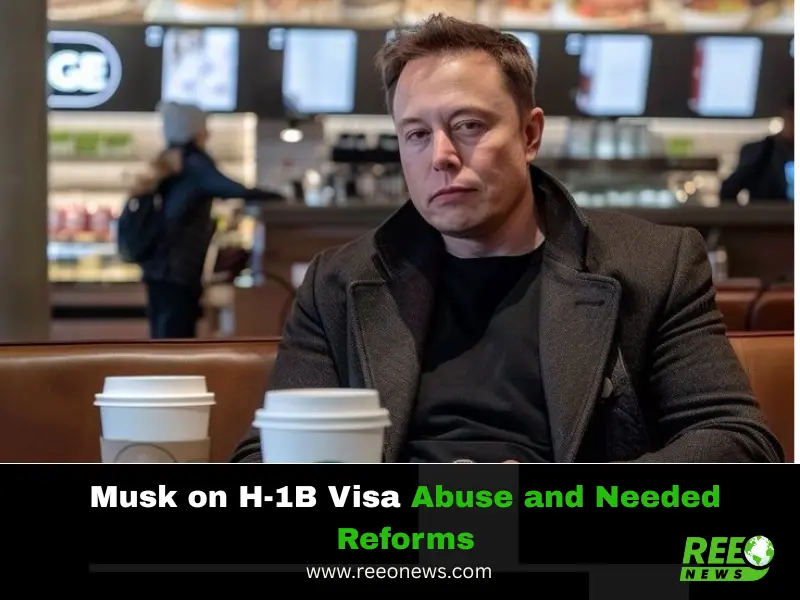
The debate around the H-1B visa programme has intensified once again after Elon Musk stated that the system is being “gamed” by certain outsourcing companies. Speaking on Nikhil Kamath’s podcast, Musk emphasized that misuse should be stopped, but shutting down the programme would be a serious mistake for America’s innovation economy. His remarks arrive during a tense moment as Donald Trump’s administration has introduced a massive $100,000 H-1B visa fee, triggering anxiety among skilled workers and tech employers, especially those from India.
This article explores Musk’s comments, the data behind H-1B visa declines, and how US–India trade tensions shape the future of skilled migration.
America’s Dependence on Skilled Global Talent
The H-1B visa is designed to allow US companies to hire highly skilled foreign professionals in fields such as technology, engineering, medicine, biotechnology, and research. For decades, this programme has played a crucial role in helping American companies fill talent gaps, strengthen innovation, and maintain global competitiveness.
India remains the largest source of H-1B talent. Nearly 70% of all H-1B visas go to Indian professionals, many of whom play central roles in Silicon Valley companies, hospitals, research labs, and startups.
Musk acknowledged this contribution, stating that America has “long benefitted” from Indian talent. He warned that any effort to dismantle the system entirely would harm economic growth and weaken America’s technological leadership.
Musk’s Concern: Outsourcing Firms Exploiting Loopholes
Despite defending the visa programme, Musk raised a critical point: misuse by outsourcing and staffing firms.
He highlighted several ways these firms “game” the system:
Filing multiple H-1B applications for the same candidate to increase lottery chances
Using the visa to hire low-cost contractors instead of genuine specialty talent
Flooding the system with bulk applications, making it harder for legitimate applicants to succeed
Musk stressed that the problem is not the H-1B visa itself but the manipulation of the lottery.
“We need to stop the gaming of the system,” he said. “But shutting it down would be very bad.”
His comments echo long-standing criticisms raised by US lawmakers and industry experts who argue that the system often favours large staffing firms instead of truly skilled individuals.
Data Shows Sharp Decline in H-1B Approvals for Indian Firms
A new study by the National Foundation for American Policy (NFAP) reveals a dramatic decline in visa approvals:
Only 4,573 H-1B petitions were approved for the seven largest Indian outsourcing firms this year.
This represents a 70% drop since 2015.
Approvals are also 37% lower than in 2024.
These numbers reflect the increasing scrutiny under US immigration policies. The NFAP report warns that under Trump’s second term, stricter rules could lead to higher denial rates, additional audits, and more unpredictable visa processing.
For many Indian workers, this creates uncertainty about career plans, long-term relocation, and job stability.
Trump’s $100,000 H-1B Fee Adds to Anxiety
In September, President Trump introduced a $100,000 fee for H-1B applicants.
This unprecedented fee has sent shockwaves across the tech industry and global workforce.
The impact includes:
Increased financial burden on employers
Reduced hiring of foreign workers
Higher risk for startups and mid-sized companies
Workers reconsidering relocation plans
More pressure on Indian outsourcing firms already experiencing declining approvals
Critics argue that such a fee could discourage companies from hiring specialized global talent, hurting innovation and slowing technological progress.
Musk Disagrees With Tariff-Heavy Economic Policies
In addition to immigration issues, Musk discussed Trump’s heavy reliance on tariffs. He claimed he unsuccessfully tried to persuade the former president not to increase import duties, arguing that tariffs distort markets and disrupt supply chains.
The United States recently imposed:
50% tariffs on several Indian goods
A 25% penalty linked to countries purchasing Russian oil, affecting India directly
These policies add complexity to an already fragile trade relationship.
India–US Trade Relations: High Tariffs and Ongoing Negotiations
While many countries have secured favourable trade agreements with the US, India continues to face some of the highest tariff rates globally. Goods such as steel, textiles, agricultural products, chemicals, and electronics face steep duties.
Negotiations between New Delhi and Washington are ongoing, with hopes of finalizing a trade deal before the end of the year. A successful agreement could reduce tariffs, improve market access, stabilize supply chains, and encourage more high-skilled migration.
The outcome of these negotiations may significantly shape the future of both trade and immigration between the two nations.
Conclusion: Reform, Don’t Remove
Elon Musk’s message is clear:
The H-1B visa programme is essential, but reforms are necessary to prevent abuse.
His comments highlight a broader truth—America’s success in technology and science depends heavily on skilled global workers, especially from India.
As Trump’s new policies reshape the visa and trade landscape, both countries will need to find a balanced approach that:
Prevents loophole exploitation
Protects legitimate skilled talent
Strengthens India–US trade and economic ties
Supports innovation in both nations
The coming months will determine whether the H-1B system becomes more restrictive or evolves into a fairer, more efficient gateway for global talent.