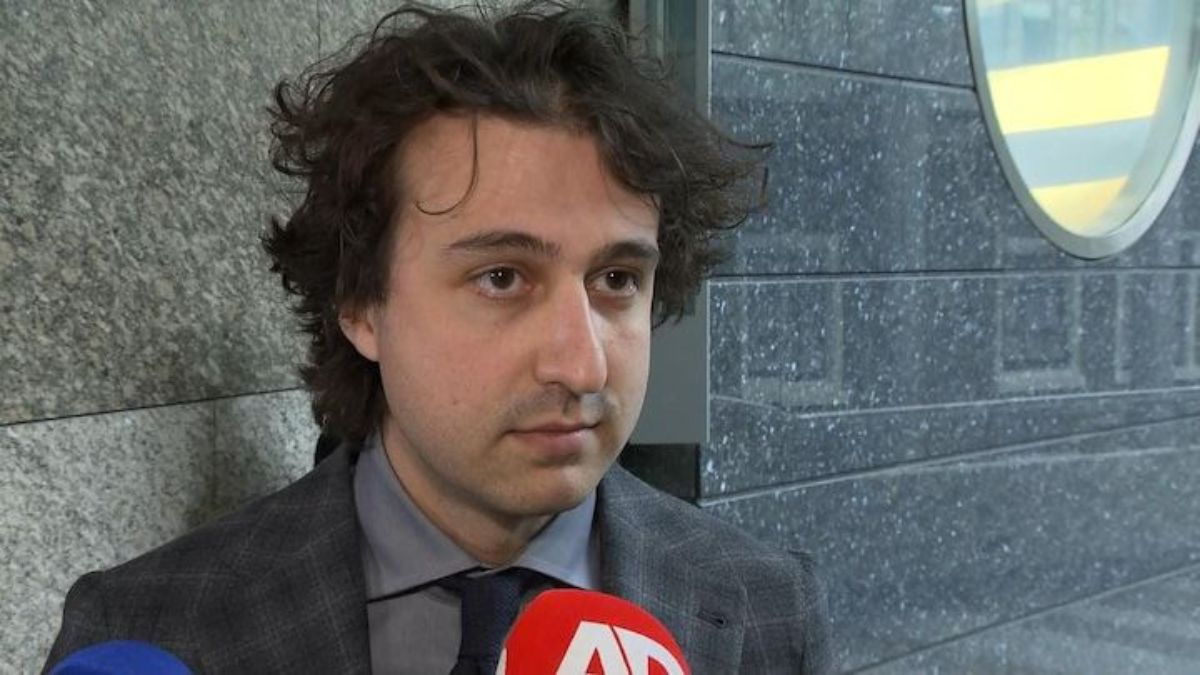










Imaan Mazari and Hadi Chattha
The controversial tweets case involving Imaan Mazari and Hadi Chattha has taken a significant turn, with the couple intensifying their legal efforts to secure what they describe as a transparent and fair trial. Across three different judicial forums—the District and Sessions Court, Islamabad High Court (IHC), and the Supreme Court of Pakistan—the couple has raised concerns over due process violations, improper representation, and procedural irregularities that they believe compromise their constitutional rights.
Defence Submits List of Witnesses in Islamabad Sessions Court
On Friday, proceedings resumed before Additional Sessions Judge Muhammad Afzal Majoka in the District and Sessions Court, Islamabad. At the outset, Imaan Mazari and Hadi Chattha submitted a detailed list of defence witnesses as part of their legal strategy in the controversial tweets case. According to their submissions, the witnesses include high-profile individuals such as Ahmed Noorani’s mother, journalist Mudassar Naru’s mother, politician Sardar Akhtar Mengal, poet Ahmed Farhad, and journalist Arifa Noor. The defence requested the court to allow the witnesses to testify either in person or online, depending on availability and feasibility.
This move reflects the couple’s insistence on presenting a comprehensive defence despite the challenges they claim to be facing in court. The defence emphasized that these witnesses can shed light on the context and motivations behind the social media posts that led to the case.
Also Read: European Country to Close Its Embassy in Islamabad
Request to Record Statements Under Section 342 CrPC
A major point of contention has been the recording of statements under Section 342 of the Criminal Procedure Code (CrPC). During the hearing, Hadi Chattha personally argued an application seeking permission for both accused to record their own statements rather than relying on a version allegedly submitted by the state counsel. Chattha asserted that the statement filed in the court was neither prepared by them nor shared with them beforehand.
Chattha told the court that during cross-examination, the state counsel was provided a questionnaire of 33 questions—meant for the defence to answer—which was later used to draft a Section 342 response without their consent. He argued that this action undermines the fundamental right of the accused to present their own statement, free from influence or misrepresentation.
To reinforce his position, Chattha informed the court that a no-confidence application had already been filed against the state-appointed counsel, Taimur Janjua. According to the defence, the counsel’s actions have repeatedly contradicted their interests, raising serious concerns about representation.
Bar Representatives Support the Defence
The defence stance received strong support from legal representatives present in the courtroom. District Bar President Naeem Gujjar, lawyer Raja Aleem Abbasi, and former High Court Bar President Riasat Ali Azad advocated for allowing the accused to present their own Section 342 statements. They argued that no trial could move forward without ensuring that the accused have full knowledge and control over statements attributed to them.
Their intervention highlighted broader concerns within the legal community about representation rights, transparency, and due process in politically sensitive cases.
Prosecution Refutes Defence Claims
The prosecution, in its turn, strongly opposed the defence’s assertions. Prosecution representatives insisted that the matter had already undergone forensic examination and that the defence’s claims were misleading. They referenced Supreme Court rulings to support their argument that the trial process had been conducted appropriately so far.
In a significant step, the state counsel submitted written closing arguments, signaling the prosecution’s intent to move toward the conclusion of the trial.
The courtroom atmosphere intensified when Judge Majoka briefly stepped out following slogans raised by some lawyers. However, he later returned and continued the proceedings. After hearing arguments from both sides, the court adjourned the case until Monday, December 8.
Petition Filed in IHC Alleging Bias and Lack of Transparency
Parallel to the trial court proceedings, Imaan Mazari and Hadi Chattha filed a petition in the Islamabad High Court seeking the transfer of their case. The petition alleges that the trial under Judge Afzal Majoka lacks transparency and fairness.
Reports from the courtroom noted that Mazari, in apparent frustration, told the judge, “Give me the sentence of seven years, I am ready.” The judge reportedly did not respond.
The defence reiterated before the IHC that the state counsel submitted a Section 342 statement without their consent, that three applications submitted by them were dismissed without justification, and that evidence was recorded in their absence—an alleged violation of Section 353 of the CrPC, which mandates that evidence must be recorded in the presence of the accused.
The IHC has issued notices to the prosecution, and the matter is expected to be heard soon.
Supreme Court Petition Filed Under Article 185(3)
Taking the matter a step further, Mazari and Chattha have also approached the Supreme Court of Pakistan in hopes of securing immediate intervention. Their petition challenges the Islamabad High Court’s order declining ad-interim relief to stay the trial proceedings.
Through their counsel, Advocate Faisal Siddiqi, the couple argued that the trial is approaching its final phase and that immediate relief is essential to prevent an unjust outcome. They maintained that recording evidence in their absence constitutes a clear violation of their right to due process guaranteed under Article 10A of the Constitution.
The Supreme Court has been urged to take up the petition on an urgent basis, especially since failure to grant a stay may render their criminal revision application infructuous.
Conclusion
The legal battle involving Imaan Mazari and Hadi Chattha now spans multiple courts and focuses primarily on issues of fair trial, transparency, and accurate representation. As the controversial tweets case approaches its final stages, the couple hopes that their appeals before the IHC and Supreme Court will ensure that constitutional guarantees are upheld.
With the trial court set to resume proceedings on December 8, all eyes remain on how the case unfolds in light of the mounting legal complexities and questions about due process.