








Global RAM and SSD Prices
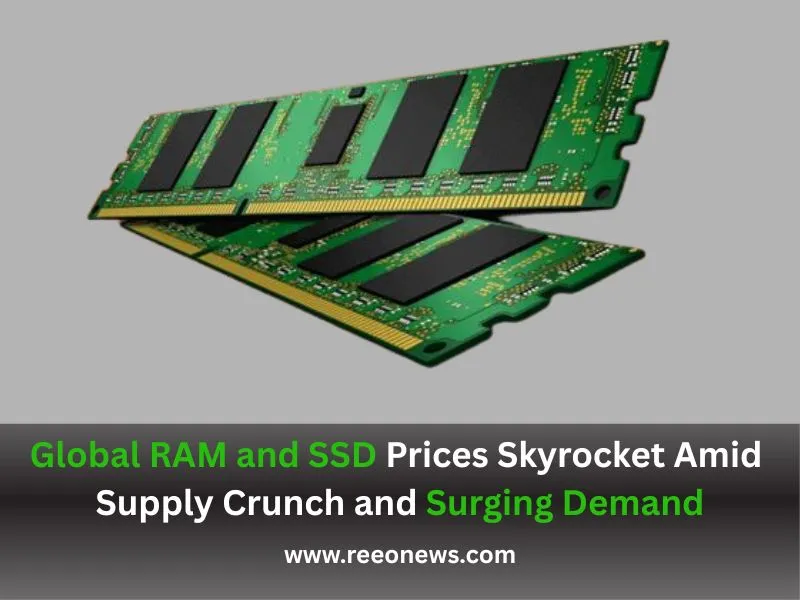
The global memory market is undergoing one of its most dramatic price surges in years. RAM costs have skyrocketed by as much as 500%, while SSD prices have doubled across consumer and enterprise segments. What began as a moderate uptick in early-year contracts has now become a full-blown pricing shock affecting PC builders, data centers, and everyday consumers.
A Perfect Storm: Supply Constraints Collide With Surging Demand
Several overlapping factors are responsible for this historic price climb. One of the biggest drivers is the rapidly expanding demand for memory used in AI servers, cloud infrastructure, and high-performance computing. As major cloud providers and AI companies race to scale up training clusters and inference systems, massive amounts of DRAM and NAND flash are being consumed at unprecedented rates.
Manufacturers simply cannot ramp up production fast enough. DRAM fabrication is notoriously complex, and major memory producers spent the last few years cutting output due to market oversupply and declining PC shipments. Those production slowdowns were reasonable at the time—but they left inventories dangerously low just as AI-related orders surged.
NAND flash, the foundation of SSDs, is facing similar constraints. Although production capacity has improved compared to the tightest periods of the pandemic, inventory corrections and the pivot to higher-density, higher-margin NAND chips mean fewer low-cost SSD components are available. This shift has pushed prices sharply upward, especially for entry-level and midrange SSDs that previously benefited from years of steady price declines.
AI and Data Center Growth Reshape the Memory Market
The explosive growth in artificial intelligence is arguably the most influential factor driving the increase. Modern AI servers often require hundreds of gigabytes to several terabytes of DRAM to operate efficiently. Advanced GPU clusters—popularized by companies building large language models, recommendation engines, and data analytics systems—are designed to scale memory bandwidth and capacity as aggressively as compute power.
This reallocation of supply toward enterprise-grade memory means fewer chips are available for mainstream consumer hardware. As a result, standard DDR4 and DDR5 kits have experienced steep cost hikes, with some high-demand modules now selling for several times their price just months prior.
From PC Builders to Gamers: Consumers Feel the Impact
Retail pricing reflects the severity of the squeeze. Upgrades that were once considered affordable—such as increasing RAM from 16GB to 32GB or switching from a 500GB to 1TB SSD—now cost significantly more. For budget-conscious PC builders, the sudden price changes are disrupting planned upgrades and causing many to delay new builds entirely.
Gamers, home office users, content creators, and students are all feeling the impact. Even midrange SSDs, which used to hover comfortably in the value segment, now command noticeably higher prices. High-performance NVMe drives, particularly those used for gaming or professional workloads, have risen even more sharply.
Enterprise Buyers Battle Rising Costs
Data centers, cloud operators, and enterprise IT departments are also struggling to manage these cost increases. Many large-scale buyers negotiate memory purchases months in advance, but the unexpected surge has led to contract adjustments, delayed expansions, and revised hardware budgets.
AI companies are competing directly with cloud providers for the same memory supply, intensifying the pricing pressure. As more organizations adopt AI in everyday operations—from automation to analytics—the ripple effects are being felt across nearly every sector of the tech industry.
Manufacturing Challenges and Slow Expansion
Memory fabrication involves long lead times and enormous capital investment. Even though manufacturers are now rushing to expand capacity, adding new production lines or upgrading existing ones cannot happen overnight. Building advanced DRAM or NAND facilities may take years, meaning supply relief will come gradually rather than immediately.
Additionally, many fabs are transitioning to more advanced process nodes to support next-generation memory architectures. While these transitions promise higher density and improved performance, they also cause temporary production slowdowns, further tightening supply.
How Long Will the Price Surge Last?
Industry analysts expect that elevated memory prices may persist for multiple quarters. Some forecast stabilization later in the year, while others warn that continued AI-driven demand could keep costs high well into next year.
The direction of the market will depend on several factors:
-
How fast manufacturers can expand capacity
-
The rate of AI infrastructure growth
-
Consumer PC demand during upcoming sales cycles
-
Inventory adjustments across the supply chain
For now, the consensus is clear: memory prices will not return to previous lows anytime soon.
What Consumers Can Do
While the situation is challenging, consumers have options to mitigate the impact:
-
Delay non-essential upgrades if current hardware is still adequate.
-
Watch for sales or refurbished components, which may remain more price-stable.
-
Consider external storage solutions if SSD upgrades are too costly.
-
Buy from reputable sellers to avoid quality issues during market fluctuations.
A Market in Transition
The surge in RAM and SSD prices signals a fundamental shift in the global memory landscape. AI and cloud computing are reshaping supply chains, manufacturing priorities, and pricing structures far more quickly than previous technological waves.
As production gradually scales and markets adjust, prices may stabilize—but the era of ultra-cheap memory appears to be fading, replaced by a new environment shaped by unprecedented technological demand.