







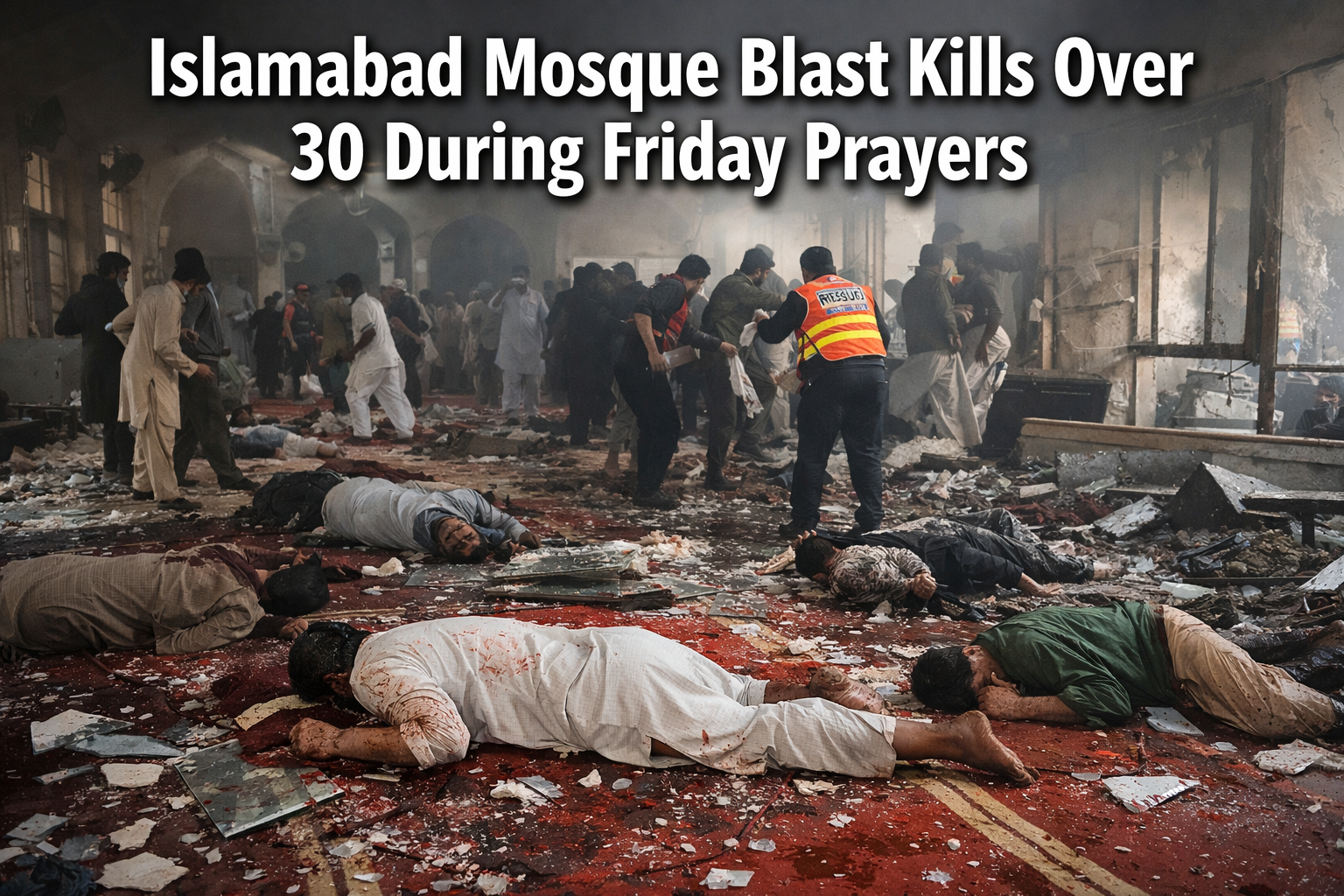
Blast at mosque in Islamabad has shaken the country and drawn global attention. The explosion occurred during Friday prayers, a time when mosques are usually crowded. This incident is not just a security issue — it is a human tragedy affecting families, communities, and public safety. Understanding what happened and why it matters helps readers stay informed and aware. The deadly Blast at Mosque in Islamabad serves as a reminder of the ongoing challenges faced by communities.
Also Read: Bondi Beach Terror Attack Kills 11 at Jewish Event
What Happened at the Mosque
According to initial reports, a powerful explosion struck a mosque in the Tarlai area of Islamabad during Friday prayers. The mosque was full, which led to a high number of casualties.
-
More than 30 people were killed
The impact of the Blast at Mosque in Islamabad has reverberated throughout the nation, prompting discussions about security and safety measures in public spaces.
-
Over 100 people were injured
-
Emergency declared in major hospitals
-
Injured victims shifted to PIMS and nearby hospitals
Some security sources suggested the possibility of a suicide attack, but authorities are still investigating and have not issued a final confirmation.
Scene After the Blast
Eyewitness accounts described panic and chaos immediately after the explosion. Rescue teams and ambulances rushed to the scene, and injured worshippers were carried out for medical treatment.
In such situations, rapid emergency response often saves lives, and hospitals played a critical role in handling the injured.
Government and Official Response
Prime Minister Shehbaz Sharif condemned the attack and expressed deep sorrow over the loss of lives. Local administration and police sealed the area and began a formal investigation.
Officials warned that the death toll could rise because several injured victims remain in critical condition.
Why This Matters for Readers
This is not just a headline — it has real implications:
-
Highlights public safety and security concerns
-
Shows the importance of emergency response systems
-
Raises awareness about crisis preparedness
-
Reminds people to stay informed and cautious
In simple terms, informed communities make safer decisions.
Common Mistakes or Misconceptions
1. Assuming the culprit too quickly
Many people on social media jump to conclusions before investigations are complete. This spreads misinformation.
2. Exaggerating casualty numbers
Early figures often change. Only official updates should be trusted.
3. Spreading panic
Sharing unverified news creates fear rather than helping the situation.
Expert Insight / Real-World Observation
From a journalism and crisis-reporting perspective, the first few hours after such incidents are often the most confusing. Information is incomplete, numbers change, and rumors spread quickly.
Also Read: 8 Terrorists Killed in Kalat Operation, ISPR Confirms
In past incidents, responsible reporting and calm public behavior helped prevent further panic. Practical actions that truly help include:
-
Sharing only verified information
-
Following official updates
-
Avoiding panic and rumors
-
Supporting rescue efforts and blood donation
Such responses strengthen society during crises.
Conclusion
The Islamabad mosque blast is a tragic reminder that security challenges still exist. In times like these, the most important response is responsible behavior — staying informed, avoiding misinformation, and helping where possible. Strong communities remain calm, united, and supportive even in difficult moments.