








9-Year-Old Runner’s IOC Ban
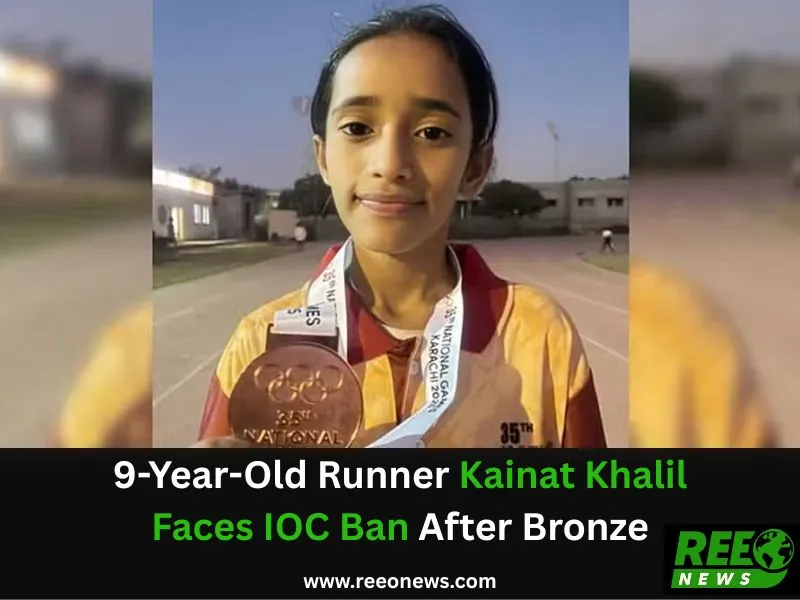
The story of Kainat Khalil, a talented nine-year-old athlete from Sindh, has become a flashpoint in Pakistan’s sporting circles. Her remarkable performance at the 35th National Games—where she secured a bronze medal in the 10,000m race—was overshadowed by a dramatic turn of events when she was denied participation in the 5,000m race due to an IOC age-related restriction, triggering nationwide debate. The 9-year-old runner IOC ban has since become a symbol of the tension between strict regulations and nurturing young talent.
Kainat Khalil: A Young Talent Rising Against Odds
At just nine years old, Kainat Khalil has demonstrated endurance, discipline, and natural athletic ability beyond her years. Representing Sindh in a 14-team competition, she captured the nation’s attention by emerging as a standout performer in long-distance running—an area typically dominated by older, more experienced athletes.
Also Read:ICC Men’s T20 World Cup 2026: A High-Stakes Cricket Battle Begins
Despite her young age, Kainat has trained rigorously under the guidance of her coach, who has been vocal about the challenges she faces due to institutional decisions and age-based barriers. Her story has sparked admiration from sports fans and criticism of administrative inconsistencies.
Bronze Medal Glory: 10,000m Race Performance
Kainat’s biggest achievement in the National Games came during the 10,000m long-distance race. Completing the demanding event in 48 minutes and 42.70 seconds, she secured a well-deserved bronze medal, proving that her age was no limitation to her stamina or dedication.
However, even this achievement did not come easily. According to her coach, Kainat was initially barred from participating in the 10,000m race due to her age. It was only after he submitted a written undertaking—accepting full responsibility for her wellbeing—that the officials reluctantly permitted her to run. They allegedly believed she would withdraw after “two to three rounds.”
Instead, she defied expectations and completed the race with determination, ultimately reaching the podium.
The 5000m Race Controversy: A Sudden Barrier
Despite her bronze medal performance, controversy erupted again when Kainat prepared to compete in the 5,000m race—another long-distance event where she was expected to deliver a strong performance. Her BIB number was issued, her team was ready, and she had already warmed up for the competition.
But moments before the race was set to begin, organizers intervened and stopped her from participating, citing her age. According to her coach, officials claimed her participation violated International Olympic Committee (IOC) rules, which prohibit underage athletes from competing in long-distance categories due to safety concerns.
This sudden exclusion not only halted her race but left her emotionally devastated. In a video shared on social media, the young athlete struggled to speak and eventually broke into tears as she watched the race begin without her.
The emotional footage quickly circulated online, intensifying public debate and criticism of the event’s management.
Coach’s Frustration and Accusations of Inconsistency
Kainat’s coach openly criticized the organizers, accusing them of inconsistency and lack of support for young talent. He highlighted how she was allowed to participate in the 10,000m race only after repeated appeals—yet was suddenly barred from the 5,000m competition, despite having a BIB number ready.
“It is said that Pakistan does not prevail in sports. How will sports go ahead?” he lamented in one of his video statements.
Also Read:Pakistan’s Full Fixture and Schedule in T20 World Cup 2026
His frustration echoed a broader sentiment among athletes and fans who believe that Pakistan’s sports infrastructure often fails to support emerging prodigies. The coach argued that if safety was a concern, organizers should have applied the rule uniformly across all events—not selectively.
Understanding the IOC Age Rule
The organizers justified their decision by referring to IOC guidelines, which restrict the participation of very young athletes in endurance-based events due to potential health risks. These rules are designed to:
Protect young athletes from long-term health impacts
Ensure safe development in competitive sports
Maintain global standards in youth participation
However, critics argue that National Games are not the Olympics, and age-specific categories should be defined more clearly for local competitions. Many believe exceptional young athletes—under proper supervision—should be allowed to compete, especially when they have already demonstrated their capability.
This conflict between safety protocols and talent development lies at the heart of the 9-year-old runner IOC ban controversy.
Emotional Impact on the Young Athlete
The emotional toll of the incident was visible in Kainat’s video, where she attempted to express her disappointment but broke down in tears. Watching her fellow competitors run without her was heartbreaking, not only for her coach but for viewers across social media platforms.
The incident has sparked national sympathy, with many questioning why a child capable of winning a medal was barred after proving her potential just days earlier.
Public Reaction and Social Media Uproar
The video statements by her coach, along with Kainat’s emotional reaction, went viral across platforms such as X, Facebook, and TikTok. Public sentiment strongly leaned toward supporting the young athlete, with many demanding clarity, fairness, and better management from sports authorities.
Also Read:Rams vs CardinalsWith Historic 45-Point Offensive Show
Hashtags related to the incident trended, with people criticizing inconsistent policies and calling for reforms in youth athletics.
The Larger Debate: Rules vs. Talent Development
Kainat’s case has triggered a broader national discussion about:
Whether local competitions should strictly follow IOC rules
How Pakistan can balance safety with encouragement
The need for dedicated youth categories to prevent such controversies
Providing psychological and emotional support to young athletes
Sports experts argue that Pakistan must invest in youth sports infrastructure if it aims to produce international-level athletes. Precision, planning, and consistency should guide decisions—not last-minute interventions that discourage emerging talent.
Conclusion
The 9-year-old runner IOC ban incident involving Kainat Khalil has become more than just a race-day controversy—it has evolved into a national conversation about how Pakistan treats its young athletes.
Despite being denied entry to the 5,000m race, Kainat’s bronze medal performance and emotional resilience have won hearts nationwide. Her story symbolizes both the potential of Pakistan’s youth and the urgent need for structured, supportive, and transparent sports policies.
If nurtured properly, Kainat and athletes like her may one day represent Pakistan on the world stage. But for that to happen, the system must evolve—starting with fairness, clarity, and encouragement for young talent.