







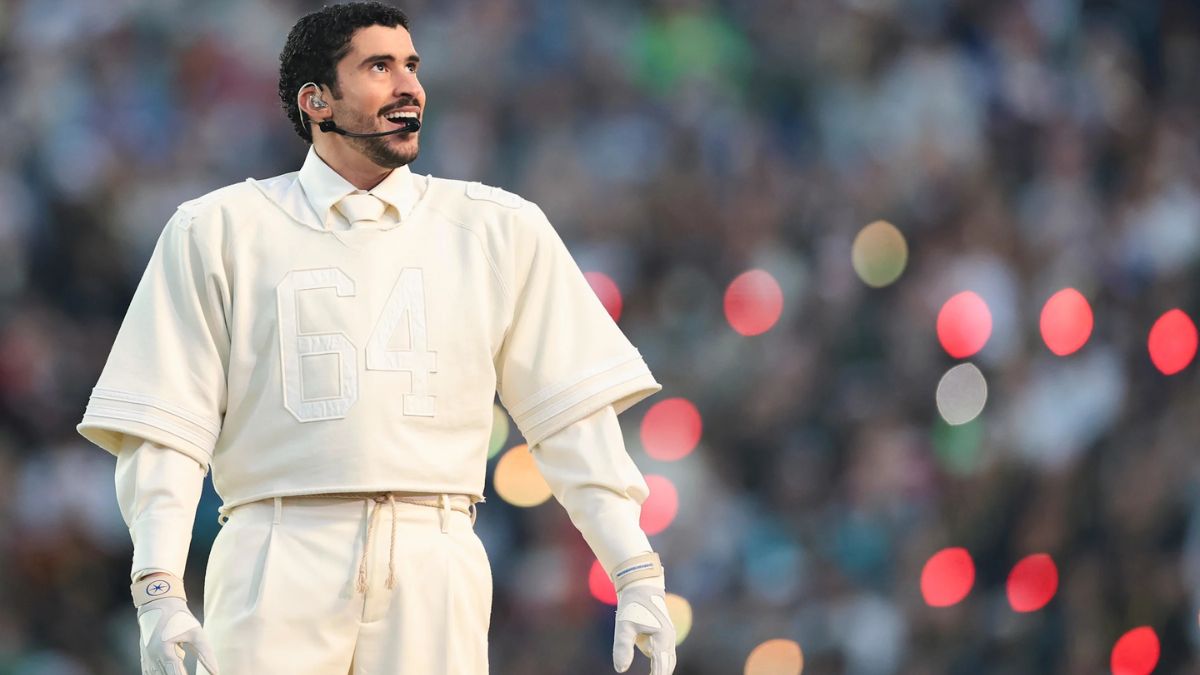
The Super Bowl 2026 halftime show delivered one of its most culturally resonant performances in years, as Puerto Rican superstar Bad Bunny transformed Levi’s Stadium into a vibrant tribute to his homeland. Viewed by over 125 million people worldwide, the performance combined music, theatrical staging, and political undertones in a show that highlighted unity, culture, and the power of artistic expression.
A Stage Like No Other: Puerto Rico on the Field
From the opening moments, it was clear this halftime show would differ from typical spectacle-driven performances. Bad Bunny, born Benito Antonio Martínez Ocasio, emerged from the center of Levi’s Stadium, which had been transformed into a mock Puerto Rican countryside. Sugarcane fields, plantain trees, and village-style settings recreated the environment of his native island, offering the global audience a taste of Puerto Rican life.
Also Read:Top Winter Olympics Sports Explained for Beginners
Central to the stage design was “La Casita,” a pink concrete-brick house familiar to fans from Bad Bunny’s No Me Quiero Ir de Aquí residency in Puerto Rico. The house served as both a symbolic and functional centerpiece, hosting celebrity guests including Jessica Alba, Pedro Pascal, Karol G, Cardi B, and Alix Earle as the rapper moved through his set.
“The goal was to connect with my roots, my culture, and my people,” Bad Bunny said during a press briefing before the show. “Bringing that feeling to one of the biggest stages in the world is something I never imagined.”
Super Bowl 2026 Halftime Performance Highlights: Music Meets Theater
Bad Bunny opened with fan favorites “Tití Me Preguntó” and “Yo Perreo Sola,” accompanied by a troupe of dancers weaving through the stage. He then performed a dramatic stunt, crashing through the roof of La Casita into a furnished interior, before hopping on a white truck to launch into “EoO.” A particularly tender moment came when he handed a Grammy Award to a young boy sitting in front of a television, highlighting the personal significance of his career achievements.
Costume changes punctuated the performance, reflecting a polished yet understated style. His opening ensemble was a cream-colored Zara outfit, including a collared shirt, cropped sweater, chinos, and sneakers, designed by his frequent collaborators Storm Pablo and Marvin Douglas Linares. Later, he donned a double-breasted cream suit and tie for portions of the show that featured guest appearances.
Special Guests and Cultural Symbolism
Lady Gaga appeared mid-show to perform “Die With a Smile,” accompanied by a salsa band. Her baby-blue flamenco dress, adorned with Puerto Rico’s national flower, the flor de maga, added to the show’s cultural richness. Later, Ricky Martin joined to perform “LO QUE LE PASÓ A HAWAii,” reflecting on the displacement of Puerto Rican locals.
The performance incorporated striking symbolism. Dancers dressed as jibaros, traditional Puerto Rican farmers, climbed atop simulated power poles, referencing the island’s persistent electricity crises. Bad Bunny waved a Puerto Rican flag during his performance of “El Apagón,” underscoring both a sense of national pride and a subtle critique of infrastructure neglect.
Other notable moments included an actual wedding ceremony staged on the field and appearances by Karol G, Cardi B, Jessica Alba, and Pedro Pascal, who danced under La Casita’s roof. These sequences emphasized the themes of community, celebration, and inclusion, ensuring the performance resonated far beyond music alone.
Themes of Unity and Social Commentary
Beyond cultural celebration, the halftime show addressed broader social issues. Holding a football emblazoned with “Together we are America,” Bad Bunny emphasized unity across the Americas, naming countries in Central and South America, the Caribbean, and North America while exclaiming, “God Bless America.” A large screen displayed the phrase, “The only thing more powerful than hate is love,” a clear rebuttal to pre-show criticism and, by many interpretations, a statement against discriminatory policies.
The show’s underlying messages are consistent with Bad Bunny’s recent work, particularly his Grammy-winning album DeBÍ TiRAR MáS FOToS. The album reflects on Puerto Rican identity, immigrant rights, and personal introspection—elements that carried into the halftime performance.
Reception and Cultural Impact
Reactions to the show have been overwhelmingly positive, with many praising its combination of musical excellence, cultural homage, and subtle political commentary. Critics noted that Bad Bunny successfully translated his Puerto Rican residency experience to the global stage, offering both spectacle and depth.
Also Read: Rams vs CardinalsWith Historic 45-Point Offensive Show
The performance also sparked conversations about representation in mainstream American entertainment. Bad Bunny is the first Spanish-language rapper critical of U.S. immigration policy to headline a Super Bowl halftime show, challenging traditional expectations for the iconic event.
Why It Matters
The Super Bowl halftime show has long been a barometer of cultural influence. By centering Puerto Rican culture and addressing issues like infrastructure, displacement, and unity, Bad Bunny redefined what a global audience can expect from the event. His performance demonstrates that mainstream stages can serve as platforms for meaningful cultural expression, blending artistry with social awareness.
From a broader perspective, the show also exemplifies how music can bridge international audiences. With streaming platforms making global access immediate, millions of viewers beyond the U.S. experienced Puerto Rican culture firsthand, from traditional dance and music to culinary nods and symbolic imagery.
Conclusion
Bad Bunny Super Bowl 2026 halftime performance will likely be remembered not just for its entertainment value but for its cultural and political resonance. By weaving Puerto Rican identity, unity, and social commentary into a globally broadcast spectacle, the rapper offered a powerful reminder of the role music plays in shaping conversations, challenging norms, and celebrating heritage.
As Bad Bunny himself reflected after the show, “The biggest feeling has been grateful. I’m happy, processing it all one day at a time, and just living.” For viewers worldwide, this performance was more than a halftime show—it was a heartfelt celebration of culture, resilience, and love.