









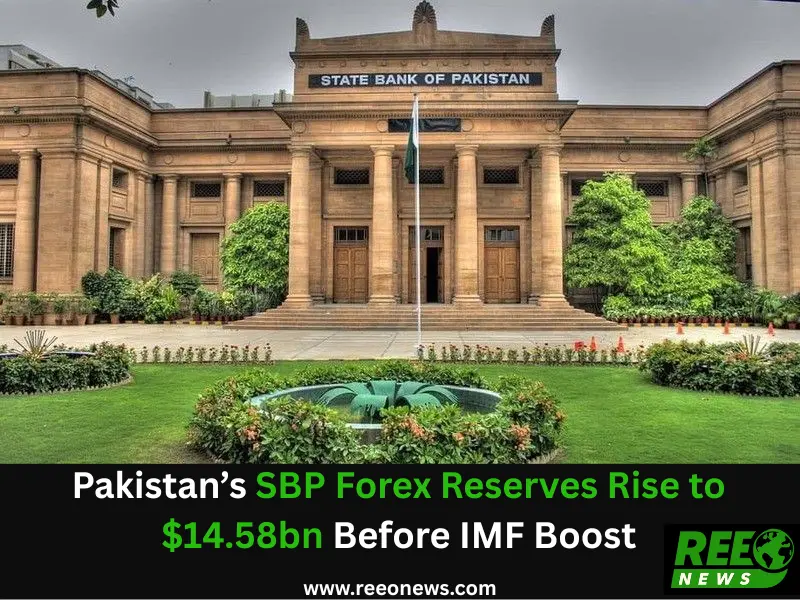
SBP Forex Reserves
Pakistan’s economic outlook received a much-needed boost this week as the SBP Forex Reserves continued their upward trend, providing renewed confidence in the country’s external financing position. According to the State Bank of Pakistan (SBP), the central bank’s foreign exchange reserves rose to $14.58 billion for the week ending December 5, 2025, marking a weekly improvement of $12 million. With new inflows from the International Monetary Fund (IMF) arriving shortly after this reporting period, Pakistan’s total reserves are now set to approach the $21 billion mark—an important milestone for economic stability.
SBP Forex Reserves Rise to $14.58bn: Weekly Snapshot
The latest SBP data shows that Pakistan’s SBP Forex Reserves increased slightly during the week, moving from $14.57 billion to $14.58–14.59 billion. While the weekly increase of $12 million appears modest, it comes at a crucial time as Pakistan strengthens its external buffers ahead of major loan repayments scheduled in the coming months.
Also Read: FBR Revises Customs Values on Imported Paper Categories
Meanwhile, the foreign reserves held by commercial banks stood at $5.03 billion, bringing the country’s total liquid foreign exchange reserves to $19.61 billion. This includes both the SBP’s holdings and the reserves maintained by private-sector banks.
For policymakers, analysts, and investors, the weekly growth—though small—signals consistent improvement in Pakistan’s foreign exchange position, especially when viewed against the broader backdrop of year-to-date gains. Since January 2025, the central bank’s reserves have increased by $2.876 billion, reflecting disciplined external payments and improved inflows.
Massive IMF Inflows to Boost Reserves Above $20 Billion
One of the most important developments influencing SBP Forex Reserves this month is the arrival of nearly $1.2 billion from the International Monetary Fund. On December 10, 2025, the SBP confirmed the receipt of SDR 914 million, equivalent to approximately $1.2 billion, following the IMF’s completion of the second review under the Extended Fund Facility (EFF) and the release of the first tranche under the Resilience and Sustainability Facility (RSF).
The IMF Executive Board, in its meeting on December 8, 2025, approved two major disbursements:
SDR 760 million under the Extended Fund Facility (EFF)
SDR 154 million under the Resilience and Sustainability Facility (RSF)
Both disbursements aim to support Pakistan’s macroeconomic stability, strengthen climate resilience, and ensure sustainable economic growth.
These inflows were not included in the reserves data for the week ending December 5 but will appear in the next update, covering the period ending December 12. With the addition of these funds, Pakistan’s total liquid reserves are projected to rise to approximately $20.81 billion, effectively pushing reserves beyond the symbolic $20 billion threshold for the first time in years.
Import Cover and External Stability Indicators
Even before the IMF inflow, Pakistan’s import cover—an important measure of external strength—remained stable at 2.77 months, based on the existing reserve level. Once the new funds are added, analysts expect the import cover to improve further, providing Pakistan with a stronger buffer against global commodity price fluctuations and external shocks.
Also Read:IMF Tax Pressure Rises as Pakistan Tax Revenue Shortfall
A healthier reserve position also strengthens Pakistan’s negotiating stance with multilateral lenders and improves the confidence of foreign investors, who closely monitor reserve adequacy in emerging economies.
Pakistani Rupee Shows Minor Improvement
As reserves improved, the Pakistani rupee recorded a slight appreciation in the inter-bank market. The local currency closed at 280.36 against the US dollar, gaining one paisa compared to the previous day’s close of 280.37.
While the movement is marginal, it reflects broader market expectations that improving SBP Forex Reserves and IMF inflows will help stabilize the exchange rate. Currency traders expect limited volatility in the coming weeks, particularly as Pakistan’s external financing situation becomes more predictable.
Gold Prices Surge as Global Trends Influence Local Market
Alongside the reserve increase, Pakistan’s precious metals market experienced notable price fluctuations. Gold prices in Pakistan rose by Rs500 per tola, reaching Rs443,562. The 10-gram gold rate also increased by Rs428 to Rs380,282. The day before, domestic gold had already surged by Rs1,200 per tola, indicating strong upward momentum.
Global trends played a central role in this rise. International spot gold soared 1.2% to $4,275.39 per ounce, while US gold futures climbed 1.9% to $4,303.90—their highest levels since October 21. Investor sentiment was boosted after the US Federal Reserve implemented a 25-basis-point rate cut, weakening the dollar and pushing investors toward safe-haven assets.
Also Read:FBR Tax Portal Glitches Trigger Nationwide Taxpayer Outrage
Interestingly, silver outperformed gold, reaching all-time high levels. Domestic silver prices increased by Rs85 to Rs6,452 per tola, while global silver hit a record $63.93 per ounce. Analysts attribute this rally to both industrial demand and safe-haven buying.
Year-to-Date Gains Strengthen Economic Outlook
The improvement in SBP Forex Reserves throughout 2025 underscores Pakistan’s progress toward stabilizing its external account. With reserves increasing by nearly $2.9 billion year-to-date, the country is better positioned to handle debt repayments, finance imports, and maintain market confidence.
The IMF inflows—combined with better export performance, controlled imports, and remittance support—paint a cautiously optimistic picture for the months ahead. Analysts believe that if reforms continue under the EFF and RSF frameworks, Pakistan could maintain its reserve momentum and move toward long-term macroeconomic stability.
Conclusion
The rise in SBP Forex Reserves to $14.58 billion marks another step forward in Pakistan’s efforts to strengthen its external financial position. With the IMF’s $1.2 billion inflow set to appear in next week’s data, the country’s reserves are poised to cross the $20 billion mark, significantly enhancing external stability. Against this backdrop, the rupee remains stable, gold and silver markets show strong movements, and Pakistan’s economic outlook appears more resilient than in previous years.
Overall, the latest data highlights a promising trajectory for Pakistan’s foreign exchange reserves and signals growing confidence in the government’s fiscal and monetary management.